Portable Washing Machine Not Spinning? Here's How to Fix It
A portable washer that stops spinning mid-cycle leaves clothes soaking wet and the cycle incomplete. Here are the reasons it happens and what you can actually do about it.
When a portable washing machine stops spinning, the drum just sits there full of water and wet laundry. It is annoying, but most of the time the fix is something you can handle without a technician.
Portable washers are built lighter than full-size machines. That means their motors are smaller, their drums are shallower, and they are far more sensitive to anything that throws off the balance. An uneven load, a kinked drain hose, or a lid switch that is slightly out of position can all halt the spin cycle. The good news is that each of those problems has a clear solution, and once you know what to look for, troubleshooting takes only a few minutes.
Products mentioned in this post


Why a Portable Washer Stops Spinning
The most frequent cause is an unbalanced load. Portable top-load washers spin by rotating the drum at high speed, and they depend on the weight being distributed evenly around the tub. When jeans or a heavy towel ends up bunched on one side, the machine detects the imbalance through vibration and cuts the spin to protect itself. Other causes include a blocked drain line that prevents the machine from emptying before the spin begins, a lid switch that does not register properly when the lid is closed, or a drum so full that clothes cannot move at all. Semi-automatic models add one more variable: the wash and spin functions are separate, so if the drain step is skipped or rushed, the spin tub receives waterlogged clothes and struggles from the start.
How to Fix an Unbalanced Load
Open the lid and pull the clothes apart by hand. Spread them around the inner drum as evenly as you can, making sure nothing is wound into a tight rope. Heavier items like jeans or bath towels are the usual troublemakers. Try washing them separately or pairing each heavy item with several lighter pieces so the weight stays distributed. For semi-automatic models like the Giantex EP21684, you need to pause the program, rearrange, and restart the spin manually. If the machine repeatedly stops after redistribution, reduce your load size. Most portable washers with a 20 lb rating, including the Costway FP11048US, perform more reliably when the tub is filled to about half capacity rather than the advertised maximum.
Check the Drain Hose and Pump
If the drum is still full of water when the spin cycle should be starting, drainage is the real problem. The machine will not attempt a high-speed spin while the tub holds water, because the extra weight makes the imbalance detection trigger instantly. Unplug the washer and pull it away from the wall. Check the drain hose for kinks, especially near the back of the unit and at the point where it hooks over the sink. A single sharp bend can cut flow to almost nothing. If the hose is clear, the blockage may be in the pump filter. On models like the Pyle PUCWM11, the filter is accessible from the front. Remove it, clear out any lint or debris, rinse it, and reinstall. Then run a drain-only cycle before attempting the spin again.
Inspect the Lid Switch
The lid switch is a small safety interlock that tells the control board the lid is fully closed. If it is cracked, misaligned, or just dirty, the machine assumes the lid is open and refuses to spin. Close the lid slowly and listen for a distinct click. On most portable washers, that click is audible and firm. If you hear nothing, or if the click sounds faint, the switch may need cleaning or replacement. Wipe the contact area with a dry cloth to remove any detergent residue that might be preventing a solid connection. On units like the Hamilton Beach HBPW3O2AMZ, this part is located on the underside of the lid rim and can be inspected without tools.
Avoid Overloading the Machine
Portable washers have capacities that are genuinely smaller than the numbers suggest, because the rating reflects dry weight in ideal conditions. The Avanti CTW84X0W-IS, for example, has a 0.84 cu ft drum, which is suitable only for a few days of laundry for one person. Filling that drum to the brim with wet clothes is one of the fastest ways to trigger a spin stoppage. A practical rule is to load the tub three-quarters full at most. For any fabric that soaks up a lot of water, like denim, fleece, or thick cotton, cut that to half. The machine will spin more completely, extract more water from each load, and wear down more slowly.
When to Consider a New Portable Washer
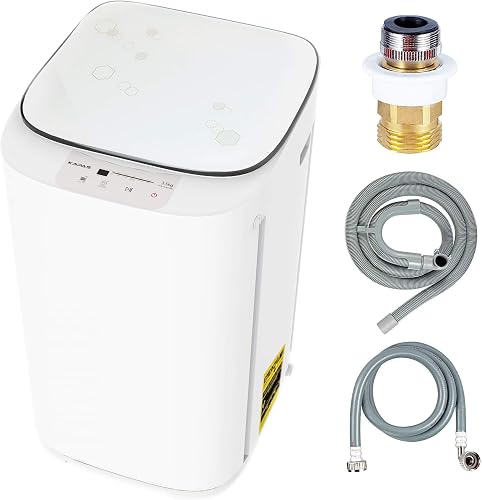
If your machine keeps stopping on the spin cycle even after you have addressed load balance, drainage, and the lid switch, the motor or drive belt may be worn. At that point, repair costs often approach the price of a new unit. When comparing replacements, look at spin speed as a key indicator of how well the machine handles real-world loads. The Kapas KPS35-735H2 reaches 1300 RPM, which is toward the upper end for portable washers and extracts significantly more water per cycle than machines in the 800 to 1000 RPM range. Models with stainless steel drums and fully automatic cycles also tend to be more consistent, since they handle drainage and spin sequencing without manual input. The Giantex EP21684, rated 4.2 stars across more than 15,200 owner reviews, has one of the stronger track records for spin reliability in its price range.
Preventive Tips for Smooth Spinning
Start every load by making sure the washer is sitting level. Portable machines move around more than built-in units, and even a slight tilt causes the drum to wobble enough to trigger the imbalance cutoff. A non-slip mat under the feet goes a long way toward keeping the machine in place during high-speed spin. Sort laundry by weight before loading: light shirts with light shirts, heavy fabrics in smaller batches on their own. For semi-automatic models, complete the full drain step before transferring clothes to the spin tub. Cleaning the drain filter and inspecting the hose every few months keeps the drain path clear and removes one of the most common causes of spin failure.
Frequently asked questions
Why does my portable washing machine stop spinning mid-cycle?
The most common reason is an unbalanced load. The machine detects uneven weight, stops the spin to avoid damage, and waits. Open the lid, spread the clothes evenly around the drum, and restart. If it keeps stopping, the load may be too heavy for the drum size.
Can I fix a portable washer that won't spin myself?
Yes, in most cases. Check for an unbalanced load first, then inspect the drain hose for kinks and the pump filter for clogs. If neither of those is the issue, test the lid switch. Motor or belt failures usually require a technician, and at that point replacement often makes more financial sense.
How much can I put in a portable washer without causing spin issues?
No more than three-quarters of the drum's rated capacity, and closer to half for dense fabrics. For a 20 lb capacity model, that means roughly 10 to 15 lb of dry laundry depending on the fabric type.
Which portable washers have the best spin performance?
Look for machines with spin speeds of 1300 RPM or higher, stainless steel drums, and fully automatic cycles. The Kapas KPS35-735H2 and the Giantex EP21684 are among the more consistently rated options for spin reliability based on owner review patterns.