Where to Drain a Portable Washing Machine: Complete Guide
Choosing the right drain location for a portable washer depends on your floor plan, the machine's pump capability, and how much vertical lift the hose needs to handle.
Most portable washing machines can drain into a kitchen sink, a bathroom sink, or a standpipe, as long as the drain point is within reach of the included hose and within the pump's vertical lift capacity. Getting this setup right from the start prevents leaks, sluggish draining, and pump wear.
The distance and height from the machine to the drain matter more than most buyers realize before purchase. A gravity-drain machine needs the hose to run downhill from the drum at all times. A pump-assisted model can push water upward, but only to a specific limit listed in the manual. Matching your drain location to your washer's capability will save you trouble on day one.
Products mentioned in this post


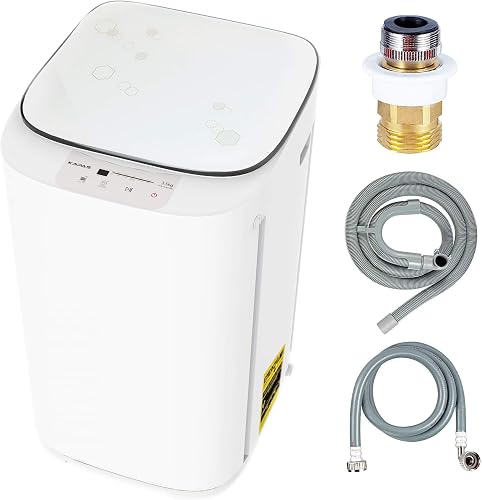
Sink Drain: The Most Common Solution
A kitchen or bathroom sink is where the majority of portable washer owners end up draining. Most machines ship with a faucet adapter that threads onto the aerator fitting on a standard sink spout. The drain hose either hangs over the edge of the sink basin or connects to the sink drain through a separate adapter. Either approach works, but hanging the hose over the edge requires a hose clip or some kind of anchor to keep it from falling out mid-cycle. That is not a minor concern: a drain hose that slips out of the sink during a cycle can dump several gallons of water on your floor in less than a minute. For a machine like the Giantex EP21684 (20 lb capacity, 4.2 stars across more than 15,200 reviews), the sink handles the water volume easily as long as the drain runs freely. A slow sink drain will back up before the cycle finishes.
Standpipe Drain: For Dedicated Laundry Areas
A standpipe is the same type of vertical drain that connects to a full-size washer. If your apartment or home has one, even in a utility closet, it is an excellent option for a portable washer. The pipe needs to be at least 1.5 inches in diameter, and the top of the standpipe should sit between 18 and 42 inches above the floor. That range matters because it provides enough height to prevent siphoning while staying within the lift range of the machine's pump. The Hamilton Beach HBPW3O2AMZ (3.0 cu ft, 4.3 stars across around 1,500 reviews) produces more water per cycle than most compact portables, and a standpipe connection handles that volume more cleanly than a sink. Do not push the hose more than 6 inches into the standpipe; inserting it too far creates an airtight seal that causes siphoning or backflow.
Laundry Tub Drain: Versatile and Reliable
A laundry tub, sometimes called a utility sink, is the most forgiving drain option for a portable washer. The basin is typically 12 to 18 inches deep, which means the drain hose has room to maneuver without splashing and the tub can absorb any minor drainage lag without overflowing. You can lay the hose over the side or use a clip to secure it to the tub lip. For semi-automatic machines like the Costway FP11048US (20 lb, 4.2 stars across about 1,500 reviews), where you manually transfer clothes between the wash and spin tubs, having a laundry sink right there makes the process much easier. You can rinse the wash tub over the sink between loads. The only drawback is that laundry tubs are not always positioned conveniently in smaller apartments.
Gravity Drain vs. Pump Assisted Drain
Gravity drain means exactly what it sounds like: the hose runs downhill from the washer drum to the drain, and water flows out on its own. This requires that your drain point is lower than the machine's drum level, which is only practical if you have a floor drain or a very low sink. Most kitchen and bathroom sinks are at counter height, which is above the drum on a portable washer sitting on the floor. That is why most portable washers sold today include a built-in pump. The Kapas KPS35-735H2 (4.1 stars across around 377 reviews) can pump water up to 4 feet vertically, which is enough to reach a standard sink from the floor. The Pyle PUCWM11 (4.5 lb, 3.6 stars across 174 reviews) is a simpler gravity-drain unit suitable only for setups where the drain sits at or below drum level. Always verify the maximum lift height in your machine's manual before settling on a drain location.
What to Do If You Have No Sink Nearby
If your planned washer location has no sink or standpipe within reach, you have a few practical options. First, check whether a longer drain hose extension can bridge the gap. Keep the total length under 10 feet and run it as straight as possible; every additional foot and every bend reduces the pump's effective lift. Second, for a very small machine like the Avanti CTW84X0W-IS (0.84 cu ft, 3.7 stars across 58 reviews), draining into a large bucket is workable because the water volume per cycle is small enough to carry. For anything larger, bucket draining becomes a chore and a spill risk. Third, a temporary drain standpipe that connects to a nearby sink's under-cabinet drain plumbing is a permanent fix that requires some basic plumbing work but eliminates the daily inconvenience.
Common Drain Mistakes and How to Avoid Them
The most frequent mistake is a drain hose that is not secured at the drain end. Even a hose that starts inside the sink can vibrate out during the spin cycle. Use a hose clip rated for washing machine hoses, not just a rubber band or tape. The second common mistake is running a hose that is too long: anything over 10 feet creates back-pressure that stresses the pump and slows drainage. Third, inserting the hose too far into a standpipe creates a sealed joint that causes siphoning. For the Giantex EP22930 (13 lb, 4.0 stars across about 1,900 reviews), the manual specifies a maximum vertical lift of 3 feet. That number should be taken seriously; exceeding it can leave water standing in the drum at the end of the cycle. Always do a test run with the machine positioned where you plan to use it and watch the drain connection for the full cycle duration before trusting the setup.
Choosing the Right Washer for Your Drain Setup
If your only available drain is a sink at a standard counter height, you need a machine with a pump. The Hamilton Beach HBPW3O2AMZ and the Kapas KPS35-735H2 both qualify. If the sink is unusually high, verify the machine's maximum pump lift before buying. For setups with a nearby floor-level drain or laundry tub below counter height, gravity-drain machines work and are mechanically simpler. The Costway GT-23104-CYWH (5.5 lb, 3.7 stars across about 4,900 reviews) is a compact pump-equipped option that connects easily to a standard kitchen sink. If vertical lift is not an issue and you want the simplest possible machine, a manual or semi-automatic unit may be sufficient, but confirm the drain height compatibility before purchasing.
Frequently asked questions
Can I drain a portable washing machine into a kitchen sink?
Yes, a kitchen sink is the most common setup. Attach the supplied faucet adapter to the aerator and hang or clip the drain hose securely over the basin edge. Confirm the sink drain runs freely and the hose is anchored, because a loose hose that falls out mid-cycle will flood the floor quickly.
Do I need a special adapter to connect the drain hose?
Most portable washers include a faucet adapter sized for standard aerator threads. If your sink has a pull-out spray head or a non-standard aerator, you may need a different adapter. Home improvement stores carry universal aerator sets that fit most sink thread patterns.
What height can a portable washer pump water?
Most pump-equipped portable washers can lift water between 3 and 4 feet vertically. The exact specification is in your model's manual and should not be exceeded. Pushing the pump past its rated lift causes slow drainage, water left in the drum, and premature pump wear.
Can I use a bucket to drain a portable washing machine?
Yes, for small machines handling loads under 5 lb, a bucket is manageable. For anything larger it becomes inconvenient and the risk of overflow increases. If you use a bucket, empty it between the wash and spin phases rather than waiting for a single large volume at the end.