Are All in One Washer Dryers Reliable?
All in one washer dryers promise to replace two appliances with one. The catch is in the drying side. Here is what specs and review patterns tell us about long-term reliability.
For small households in apartments or condos without a dryer vent, all in one washer dryers are a genuinely practical option, and the reliability picture is better than you might expect. That said, reliability has limits. These units handle washing about as well as any compact front-loader. The drying side, which uses condensation rather than heated airflow, is where owners run into friction.
Amazon ratings for the main models in this category cluster between 4.0 and 4.7 stars, though review counts are still low (four to nineteen per model). That means the scores are encouraging but not yet definitive. Understanding what affects reliability, and what maintenance looks like, will tell you more than any single rating.
Products mentioned in this post
- Equator Advanced Appliances
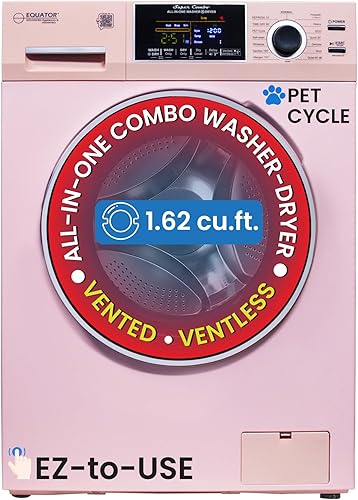
Equator Advanced Appliances EZ 4600 Washer Dryer Combo
$1259.00View on Amazon


How Reliable Are All in One Washer Dryers?
Reliability tracks closely with build quality. Modern combos from brands like Smeta and Equator use inverter motors and stainless steel drums, both of which contribute to a longer service life compared to older belt-drive designs. Inverter motors reduce mechanical wear because they ramp speed smoothly instead of running at a fixed rate. Stainless steel drums resist the chipping and corrosion that shorten drum life in porcelain alternatives.
The review data available points to general owner satisfaction. A 4.0 star floor across multiple models, even with small sample sizes, suggests that outright failures in the first year are uncommon. The most frequently noted problems are not mechanical failures but performance gaps: drying cycles that run longer than expected, and the need to clean the lint filter between every single load. Neither is a reliability flaw in the mechanical sense, but both affect how happy owners are day to day.
Capacity and Drying Performance Tradeoffs
The reliability concern that trips up the most buyers is not a broken machine, it is a mismatch between expected drying and what condensation drying actually delivers. In a combo unit, the wash drum doubles as the drying drum, but the effective dry capacity is smaller than the wash capacity. A 2.7 or 2.8 cu ft unit can handle a respectable wash load, but trying to dry that full load at once leads to damp results. The recommended practice is to dry roughly half the wash load at a time.
Condensation drying also takes longer than vented drying, typically two to three hours for a modest load. This is not a defect. It is a fundamental characteristic of the technology. Models like the Smeta SWF-120COMBO and T-120A14L-US both spec out at 2.7 to 2.8 cu ft with 16 cycles, but neither lists a drying time, which is worth noting when comparing options. If quick turnaround matters to you, plan laundry around two drying sessions, or accept that you will be waiting a while.
Top Rated Models for Reliability
Pulling from available Amazon data, a few models stand out. The Equator Advanced Appliances EZ 4600 (ASIN: B0FNXZVNX4) leads on ratings at 4.7 stars across seven reviews. Its smaller 1.62 cu ft capacity may actually help drying performance, since a smaller drum is easier to dry completely in one pass. The price is $1,259.
The Smeta T-120A14L-US carries 4.5 stars from four reviews and offers 2.8 cu ft at $1,199, making it the most affordable large-capacity option. The Smad FBM-DWF-120A14LBMU-4 sits at 4.4 stars from ten reviews at $1,187, which represents the most review data in this group and the lowest price. The Smeta SWF-120COMBO and TWF-12A14LBMU both land at 4.0 stars. None of the models in this category include smart home connectivity; controls are manual, which some buyers will prefer for simplicity and fewer electronic failure points.
Installation and Space Considerations
One of the genuine advantages of an all in one combo is how simple installation is. These units are freestanding and run on standard 110 to 120V outlets. No dedicated circuit, no venting duct, no gas line. You need a standard outlet and a drain connection, which can be a sink or a standpipe.
Weight and dimensions vary more than you might expect across models. Units in this category run from about 72 to 161 pounds and span roughly 22 to 26 inches wide, 23 to 26 inches deep, and 33 to 34 inches tall. The lighter Smeta SWF-120COMBO at 72 pounds is meaningfully easier to position than the heavier Equator at 161 pounds. Front-loading design means you will need floor clearance for the door to swing open, and a bit of kneeling is typical when loading. These units are not stackable.
Maintenance Tips to Extend Reliability
The single most important maintenance habit is cleaning the lint filter after every drying cycle, not every few loads. Lint buildup restricts airflow inside the condenser circuit, forcing the machine to work harder and extending drying times. Left too long, it can contribute to odors.
Beyond the lint filter, running a cleaning cycle once a month with a drum cleaner or a cup of white vinegar keeps mold from developing in the door seal and drum. Check the drain pump filter every two to three months for debris like coins, buttons, or accumulated lint that bypasses the main filter. Keep loads within the manufacturer's recommended weight, and make sure the unit is level on the floor. An unlevel machine vibrates more than necessary and puts uneven stress on drum bearings. Follow these steps and a quality all in one combo can remain trouble-free for five to eight years.
Comparing All in One Combos to Separate Units
The honest comparison comes down to one question: do you have a vent? If you have an exterior dryer vent, separate units will almost always dry faster and handle larger loads. A standard vented electric dryer finishes a full load in 45 to 60 minutes; a combo may take two to three times as long. For a household doing multiple loads every laundry day, that difference adds up.
For households without a vent, the comparison changes. The alternative to a ventless combo is either a laundromat, a portable dryer vented through a window, or a heat pump dryer at a higher price. For singles, couples, or anyone doing laundry every one to two days in small batches, the all in one combo is a practical solution that replaces two separate machines in a single footprint. The tradeoff is time per cycle, not machine longevity.
Final Verdict: Are They Worth It?
All in one washer dryers are worth it for the specific household they were designed for: one or two people living somewhere without an external dryer vent, who value space savings and are willing to plan laundry around longer drying cycles.
They are not the right fit for households of three or more, for anyone who regularly washes heavy items like thick towels or denim in large batches, or for buyers who expect the same throughput as a standalone dryer. Choose a model with a stainless steel drum and an inverter motor, keep the lint filter clean, and match your load size to the drum capacity. On those terms, reliability is solid.
Frequently asked questions
Do all in one washer dryers dry clothes completely?
Yes, but only if you do not overload the drum during the dry cycle. Because condensation drying is less aggressive than vented hot air, clothes may come out slightly warm-damp if you try to dry the full wash load at once. Stick to about half the drum capacity for drying and plan for a two to three hour cycle.
How long do all in one washer dryers last?
With consistent maintenance, five to eight years is a reasonable expectation. Inverter motors and stainless steel drums extend service life. The most common factor that shortens it is skipping lint filter cleaning, which strains the condenser circuit over time.
Can you use an all in one washer dryer without a vent?
Yes. Ventless condensation drying is the core feature of these units. They need only a standard 110 to 120V outlet and a drain connection. No ductwork, no window modification, no exterior wall access required.
Are all in one washer dryers more expensive to run?
The longer drying cycles mean more electricity used per load compared to a fast vented dryer. However, you are running one machine instead of two, and you avoid the installation cost of a dedicated dryer circuit or vent. For most apartments, the overall cost is comparable to running a standard washer paired with a compact electric dryer.