Why Is My Dryer Not Heating Up? Troubleshooting Guide
A dryer that won't heat is frustrating. This guide walks you through the most likely causes, from a tripped breaker to a failed heating element, and tells you when to repair or replace.
A dryer that tumbles but produces no heat points to one of a handful of root causes: a tripped circuit breaker, a blown thermal fuse, a burned-out heating element, or a blocked vent. Of those, the first two are the most common and also the easiest to check. Start there before opening any panels.
Not every dryer-not-heating situation requires a technician. Many are fixable with basic tools and a multimeter. But the difficulty varies by model and the depth of the repair. If the machine is old and the part costs are climbing, it is worth pausing to compare the repair bill against the price of a replacement before ordering anything.
Products mentioned in this post

Check the Power Supply First
Electric dryers run on a 240-volt circuit made up of two 120-volt legs. If one leg trips at the breaker, the dryer may continue tumbling on the remaining power while producing no heat at all. The symptom can look like a heating problem when it is really a breaker problem. Go to the panel and reset any tripped breakers before doing anything else. For gas dryers, confirm the gas supply valve behind the unit is fully open and that other gas appliances in the home are working normally. Also inspect the power cord where it meets the outlet for any visible damage or loose connection. These checks cost nothing and resolve the issue a meaningful percentage of the time.
Clean the Lint Filter and Vent
Restricted airflow forces a dryer to work harder and run hotter internally. When internal temperatures exceed the thermal fuse's safety limit, the fuse cuts power to the heating element as a protective measure. The dryer keeps tumbling, but heat stops. A clogged lint filter is often the initiating cause. Remove it and rinse it under warm water if any residue is visible. Beyond the filter, disconnect the exhaust hose from the back of the dryer and check for lint accumulation inside the hose itself and at the exterior wall termination. Long runs with multiple bends trap lint faster. A lint brush kit or a shop vacuum with a narrow attachment clears most blockages without professional help.
Test the Thermal Fuse
The thermal fuse is a one-time safety device. When it blows, the circuit to the heating element opens and stays open until the fuse is replaced. It will not reset on its own. The fuse is typically located on the blower housing or near the exhaust duct inside the dryer cabinet. Access requires removing the back panel or a side panel depending on the model. Set a multimeter to the continuity setting and touch the probes to each end of the fuse. A good fuse gives a continuous reading; a blown fuse shows none. Replacement fuses are inexpensive, usually under twenty dollars. Before installing the new one, verify the vent path is clear so the replacement does not blow for the same reason.
Inspect the Heating Element or Igniter
In electric dryers, the heating element is a coiled resistance wire inside a metal housing. When a section of the coil breaks, the circuit opens and heat stops. A visual inspection sometimes reveals a visible break in the coil, but a multimeter continuity test is the reliable method. If the element reads no continuity, it needs replacement. For gas dryers, the igniter glows orange or red to ignite the gas burner. A failed igniter will not glow at all, and the burner will not light. Gas valve solenoid coils can also fail, allowing gas in without ignition. Both the igniter and coils are testable with a multimeter and replaceable with parts from the appliance manufacturer or a parts supplier.
Consider the Age and Repair Cost
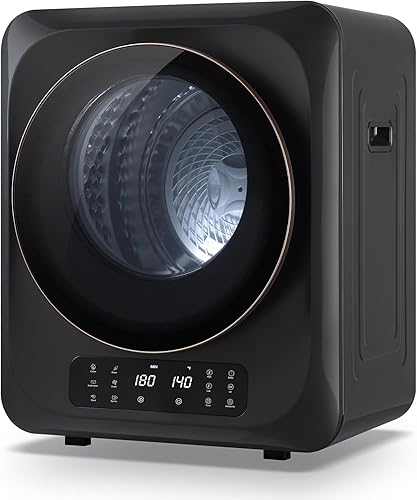
A dryer that is more than eight years old or needs a repair costing more than half the price of a comparable new unit deserves a closer look before you commit to fixing it. Heating element replacement on a full-size dryer typically runs $100 to $200 including parts; adding labor from a technician pushes that higher. Compare that against current prices: the Magic Chef MCSDRY1S is listed around $347.22 and the Auertech AU205CGY around $220. For some repairs on older machines, buying a newer, more efficient model is genuinely the better financial outcome. Check whether any remaining warranty covers the failed part before ordering anything.
When to Call a Professional
Some dryer heating failures trace back to the main control board, the timer assembly, or wiring harness faults. These components require more specialized diagnostic tools to isolate, and replacing a control board without confirming it is actually the faulty part can be expensive. If the basic checks, power, fuse, vent, heating element, have all come back clean and the dryer still will not heat, bringing in an appliance technician makes sense. Many offer a flat diagnostic fee that applies toward the repair if you choose to proceed. Get the diagnosis in writing before authorizing any parts.
Summary and Next Steps
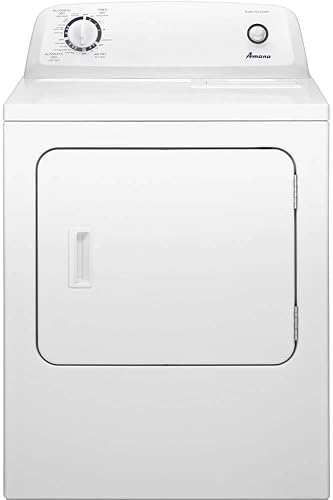
Work through the checks in order: power supply and breaker, lint filter and vent path, thermal fuse continuity, heating element or igniter. Most no-heat situations fall into one of those four buckets, and most can be resolved without professional help. If the repair cost approaches half the price of a comparable new dryer, factor in the machine's age and reliability history before deciding. The Magic Chef MCSDRY1S (4.2 stars, 1,200 reviews) is a compact electric option at a moderate price point, while the Amana NED4655EW (4.4 stars) suits full-size needs. For portable or secondary use, the Costway VD-23598EP is a lower-cost alternative worth considering.
Frequently asked questions
Why is my dryer running but not heating up?
The most common reasons are a tripped breaker, a blown thermal fuse, a faulty heating element (electric dryers), or a failed igniter (gas dryers). Start by checking the breaker and cleaning the lint filter and vent.
Can a clogged lint filter cause no heat?
Yes. A clogged lint filter restricts airflow, which can cause the dryer to overheat and trip the thermal fuse, cutting power to the heating element. Clean the filter after every load and check the vent annually.
How do I test a dryer heating element?
Unplug the dryer, access the heating element (usually behind a panel), and use a multimeter set to continuity. Touch the probes to the element terminals. If there is no continuity, replace the element. Always consult your dryer's manual.
Should I repair or replace my dryer that won't heat?
If the dryer is less than 8 years old and the repair cost is under half the price of a new model, repair is often worth it. For older dryers or expensive repairs like a control board, replacement with a budget model like the Magic Chef MCSDRY1S may be more economical.