Gas vs Electric Dryer Running Cost: Which One Costs Less?
Wondering whether a gas or electric dryer will save you money? We compare upfront prices, energy costs, and long-term expenses so you can choose the most economical option for your home.
Gas dryers cost less to run per load in most parts of the country because natural gas is cheaper than electricity at current utility rates. The catch is that gas models cost more to buy, and you need a gas line already in place, or the installation cost to add one. Electric dryers flip that equation: lower purchase prices, no gas hookup required, but higher ongoing energy costs per load.
Which comes out ahead over time depends on how often you dry, your local utility rates, and whether you already have the infrastructure each type needs. This comparison walks through the numbers so you can make the call for your specific situation.
Products mentioned in this post

Upfront Cost: Gas Dryers Are Pricier
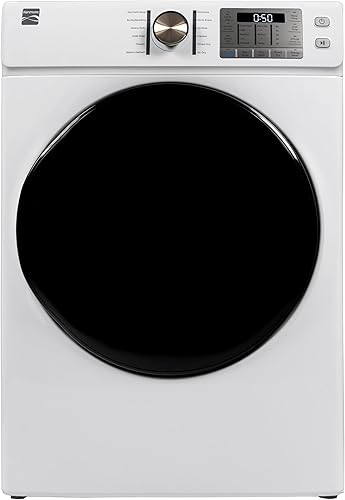
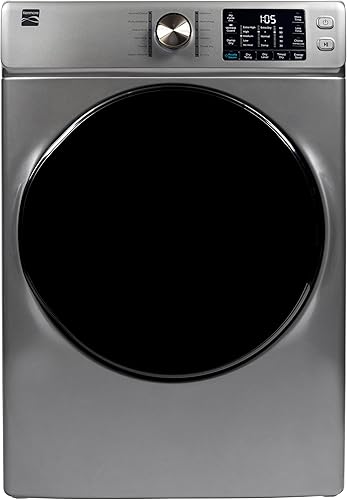
Gas dryers carry a price premium of $100 to $300 over comparable electric models. The Kenmore 8.0 cu. ft. Front Load Gas Dryer lists at $1199.99, while full-size electric options like the Amana NED4655EW sit closer to $589.88. That gap reflects the gas burner assembly, additional safety components, and the more complex venting hardware. If your home does not already have a gas line to the laundry area, installation adds another $200 to $500 depending on distance and local labor rates. Electric dryers plug into a 240-volt outlet, which most homes with a dedicated laundry space already have. Budget electric options like the Magic Chef MCSDRY1S are available under $350.
Energy Efficiency: Gas Wins Per Load
Gas burners heat air faster and at lower cost than electric resistance coils. A typical gas dryer uses 15,000 to 20,000 BTU per load. An electric dryer doing the same work draws 2,000 to 6,000 watts. Translating those figures into dollars at average national utility rates, a gas load runs roughly $0.15 to $0.30 while an electric load costs $0.30 to $0.60. For a household running five loads per week, the annual difference can reach $50 to $150 in energy savings on the gas side. Heat pump electric dryers are closing that efficiency gap and can approach gas costs per load, but they carry a significantly higher sticker price.
Lifespan and Maintenance Costs
Both gas and electric dryers have average service lives of 10 to 13 years. Gas dryers tend to need periodic professional attention for the burner assembly and gas valve solenoids, which can add $100 to $200 per service call. Electric dryers are mechanically simpler, and many repairs are accessible to a handy homeowner. Replacement parts for electric models are also generally cheaper: a heating element might cost $30, compared to $50 or more for a gas igniter. Total maintenance spending over the machine's life often runs $100 to $300 higher for gas models. Whether that offsets the energy savings depends on your usage volume and local service costs.
Factors That Affect Your Running Cost
Several variables shape the final number. Local utility rates are the biggest one: in regions where natural gas is very cheap, gas dryers win decisively; in areas with expensive gas but cheap electricity, the gap narrows or reverses. Drying frequency amplifies whatever advantage exists, so heavy users feel the per-load cost difference more than occasional users. Dryer efficiency also varies by model. Energy Star certified units use roughly 20 percent less energy than non-certified models at the same capacity. Finally, venting configuration matters: gas dryers require an exterior vent, and a well-insulated short vent run loses less heat to the outside in winter than a long, poorly sealed one.
Recommendations for Different Households
Large families running multiple loads every day get the most out of a gas dryer's lower per-load cost. The Kenmore 8.0 cu. ft. Gas Dryer (4.8 stars, 15 reviews) is a full-size option for that use case. For small households or apartments without a gas line, an electric dryer is the practical choice. The Magic Chef MCSDRY1S (4.2 stars, 1,200 reviews) at $347.22 handles compact laundry needs without special wiring. The Amana NED4655EW (4.4 stars, 87 reviews) at $589.88 is a solid full-size electric pick. For households that need 120-volt portability, the Costway VD-23598EP (4.2 stars, 110 reviews) at $184.99 works without a dedicated high-voltage circuit.
Frequently asked questions
Is it worth switching from electric to gas dryer?
If you already have a gas hookup and dry frequently, switching can save $50 to $150 per year on energy. But the upfront cost of a gas dryer plus installation may take several years to recoup. Check your local gas vs electric rates first.
Do gas dryers need a special outlet?
Gas dryers still need electricity to run the drum motor, controls, and lights. They plug into a standard 120-volt outlet. However, they also require a natural gas or propane line and proper venting to the outside.
How much does it cost to run a gas dryer per load?
On average, running a gas dryer costs between $0.15 and $0.30 per load, depending on your local gas rate. An electric dryer costs roughly $0.30 to $0.60 per load at average electricity prices.
Are electric dryers more efficient than gas?
Gas dryers are more energy efficient in terms of cost per load, but electric dryers are more efficient at converting electricity into heat. However, heat pump electric dryers are the most energy efficient overall, though they cost more upfront.