How Many Amps Does a Dryer Use?
Understanding dryer amperage helps you plan your electrical circuit and avoid blown breakers. We explain typical amp draws for different dryer types and sizes.
A standard full-size electric dryer draws 22 to 28 amps and requires a dedicated 240-volt, 30-amp circuit. Gas dryers need far less electrical power, typically 4 to 6 amps on a standard 120-volt outlet, because the heating is done by the gas burner rather than an electric element. Compact and portable dryers fall between those two, drawing 10 to 15 amps on 120 volts.
Knowing the amperage before you buy determines whether your current wiring can handle the appliance or whether an electrician needs to be involved. Getting this wrong means tripped breakers at best and a wiring hazard at worst. This breakdown covers each dryer category so you can match the machine to what your home already has.
Products mentioned in this post


Standard Electric Dryer Amperage
Full-size electric dryers are the highest-draw appliance in this category. They require a dedicated 240-volt circuit rated at 30 amps, and the machine itself pulls 22 to 28 amps while heating and tumbling. That current level powers a resistance heating element large enough to dry a substantial load in under an hour. Most homes built for laundry use in the past few decades have a 240-volt, 30-amp outlet in the laundry area, but older homes or apartments may not. If the outlet is not there, installation requires running new wiring and installing the appropriate double-pole breaker, which is a job for a licensed electrician.
Gas Dryer Amperage
Gas dryers use a gas burner to produce heat, so the electrical draw is limited to the drum motor, control board, igniter, and interior light. That keeps amperage low, typically 4 to 6 amps on a standard 120-volt outlet. This makes gas dryers straightforward to plug in on any general-purpose 15-amp circuit, as long as the gas line connection is in place. The gas line requirement is the binding constraint, not the electrical one. Homes without an existing gas supply to the laundry area need a licensed plumber to extend the line, which adds installation cost on top of the dryer's purchase price.
Compact and Portable Dryer Amperage
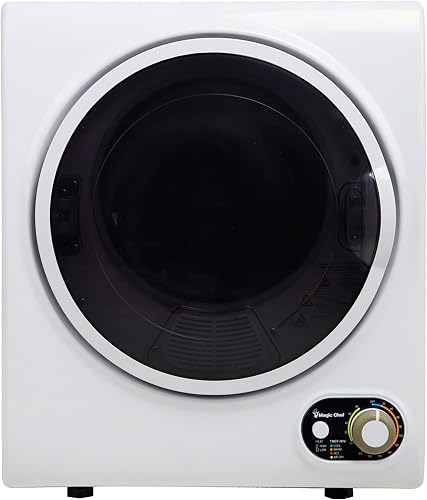
Compact and portable dryers occupy the most flexible category. They run on 120 volts and draw 10 to 15 amps, which is within the capacity of a standard household outlet shared with other moderate-draw appliances. The Magic Chef MCSDRY1S (1.5 cu ft) and the Costway VD-23598EP (10 lb capacity) are examples of this class. Because they do not require a high-voltage circuit, they can go in apartments, closets, or any room with an accessible outlet. The main caution is avoiding outlets that are already shared with other high-draw devices like space heaters or microwave ovens, which could push the circuit over its breaker rating.
How Circuit Breaker Size Relates to Dryer Amps
The circuit breaker is sized to protect the wiring, not just the appliance. A 30-amp dryer requires a 30-amp double-pole breaker and 10-gauge copper wire in the supply run. A 120-volt dryer drawing 15 amps can use a standard single-pole 15-amp or 20-amp breaker with 14 or 12-gauge wire respectively. Never install a breaker larger than the wire gauge rating, regardless of what the appliance draws. The Magic Chef MCSDRY35W (3.5 cu ft) draws around 12 amps, putting it safely within a 15-amp circuit's capacity. If you are unsure about existing wiring gauge or breaker sizing, a licensed electrician can verify before you install.
Why Dryer Amperage Matters for Your Home
Buying a dryer without verifying your home's electrical capacity creates two possible outcomes: the breaker trips every time you run a load, or the circuit overheats because it was never rated for the load. Neither is acceptable. If your home only has 120-volt outlets available for laundry, compact 120-volt dryers like the Auertech AU205CGY (around 11 amps) or a gas dryer with a nearby gas hookup are the practical options. For households with 240-volt laundry circuits already installed, a full-size electric dryer delivers faster drying and larger capacity. Matching appliance requirements to existing infrastructure avoids installation cost and ensures the machine performs as specified.
How to Check Your Dryer's Amp Rating
Every dryer sold in the United States carries a product label on the cabinet that lists voltage, wattage, and amperage. This label is usually on the inside of the door frame, the back panel, or inside the door opening. The product listing on the manufacturer's or retailer's website also typically includes these figures in the specifications section. If the wattage is listed but not the amperage, divide wattage by voltage to calculate amps. A 1,500-watt portable dryer on a 120-volt circuit draws 12.5 amps. For the Westland WDV2200XCD, checking the listed wattage and dividing by 120 gives you the draw for that 120-volt model. If you cannot find the data through either path, contact the brand directly.
Frequently asked questions
Can I run a dryer on a 15-amp circuit?
Only if the dryer is designed for 120 volts and draws 15 amps or less. Many compact dryers like the Magic Chef MCSDRY1S work on a 15-amp circuit. Full-size electric dryers require a 30-amp circuit.
What size breaker do I need for a 240-volt dryer?
A 240-volt electric dryer typically needs a 30-amp double-pole breaker. The wiring should be 10-gauge copper. Always follow the manufacturer's requirements and local electrical codes.
Do gas dryers need a dedicated circuit?
Gas dryers draw only about 5 amps, so they often share a general-purpose circuit. However, it is recommended to have a dedicated 15-amp circuit to avoid nuisance trips from other appliances.
How many amps does a portable dryer use?
Most portable dryers, such as the Costway VD-23598EP, use 120 volts and draw between 10 and 15 amps. Always check the specific model's specs to ensure your circuit can handle it.