How Many Amps Does a Washer Use?
Getting the electrical side of a washer purchase right matters more than most buyers realize. Full-size machines typically draw 10 to 15 amps, while portable models often pull less. Here is what the numbers mean for your home.
A standard household washing machine draws between 10 and 15 amps on a 120-volt circuit, which works out to roughly 1,200 to 1,800 watts during a normal wash cycle. Most full-size units need a dedicated 15-amp or 20-amp circuit, while smaller and portable models can often share a standard 15-amp outlet with other low-draw devices.
Knowing your washer's amp draw upfront prevents tripped breakers and helps you plan installation correctly. For apartments, older homes, or RVs with limited panel capacity, choosing a lower-amp model can make the difference between a smooth setup and a frustrating one. Below we walk through typical amp ranges across washer types and explain how to match any machine to your home's electrical system.
Products mentioned in this post

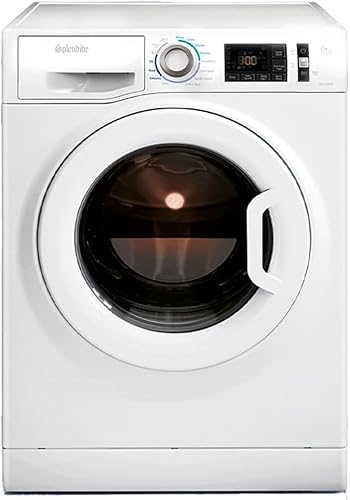

Typical Amp Draw for Full-Size Washers
Most full-size top-load and front-load washers draw 10 to 15 amps from a 120-volt circuit. The Amana NTW4516FW, a 3.5 cu ft top-loader, operates at 120 volts and its draw falls right in that range. The Westland WFL1300XD, a 13-pound-capacity front-loader running at 115 volts, sits closer to the 10-to-12-amp end. A 15-amp dedicated circuit covers most of these machines with a reasonable safety margin. Sharing that circuit with a refrigerator or dishwasher is where problems start; those peak-draw moments during spin or a heated rinse can push the breaker past its limit.
Amp Requirements for Compact and Portable Washers
Compact and portable washers are lighter on current, typically drawing 8 to 12 amps. The Avanti STW30D0W, a 3.0 cu ft top-loader at 110 volts, lands around 10 amps under normal operation. Smaller semi-automatic models like the Auertech AU8590, rated at 28-pound capacity and running on 120 volts, generally pull 8 to 10 amps. Because the motor and heating demands are scaled down, these machines are more forgiving on shared circuits. Even so, a dedicated outlet remains the safer choice; it eliminates the risk of a breaker trip during peak spin.
Why Voltage Matters for Amperage
The relationship is simple: amps equal watts divided by volts. A 1,500-watt washer on a 120-volt circuit draws 12.5 amps (1,500 divided by 120). Shift the voltage down to 110 volts and the same motor draws slightly more current to deliver equivalent power, roughly 13.6 amps. Most washers sold in the United States are rated for 120 volts, but some compact imports specify 110 or 115 volts on their nameplates. Always use the nameplate voltage, not a round number, when calculating your circuit requirements. A small discrepancy compounds when a home already has aging wiring that runs a bit low.
Do You Need a Dedicated Circuit?
The National Electrical Code recommends a dedicated 15-amp or 20-amp circuit for any washing machine. Dedicated means the washer is the only appliance on that breaker. The reason is that washers draw peak current during motor startup and high-speed spin, not a steady load throughout the cycle. Those brief spikes are enough to trip a shared breaker if another appliance is running simultaneously. For portable washers on a shared circuit, the practical rule is simple: do not run a hair dryer or space heater at the same time the washer is mid-spin.
How to Check Your Washer's Amp Draw
The fastest method is to read the specification label on the back or underside of the machine. It will list voltage and either amperage directly or wattage. If only wattage is given, divide by the listed voltage to get amps. A 1,400-watt machine on 120 volts draws 11.7 amps, for example. For real-world verification, a clamp meter placed around the power cord reads actual draw during a cycle. That is useful if you suspect the nameplate is conservative or if you are troubleshooting a tripping breaker. For purchasing decisions, the manufacturer specifications are reliable enough.
Matching a Washer to Your Home's Electrical Capacity
Older homes and apartments often have 15-amp circuits throughout the laundry area with no easy path to upgrade. In those cases, stick to washers rated at 12 amps or below under peak load. The Krib Bling XQB-Grey6-1, a 17.7-pound fully automatic portable, typically pulls under 10 amps. The Auertech AU8590 is another low-draw option at 28-pound capacity. If you are uncertain whether your panel can support a full-size washer, an electrician can check the circuit capacity and panel headroom in under an hour. That small investment is worthwhile before buying a 15-amp unit for a home that cannot safely support it.
Frequently asked questions
Can I plug a washing machine into a regular outlet?
Most washers use a standard 120-volt plug and fit a regular outlet. The key requirement is that the outlet sits on a dedicated 15-amp or 20-amp circuit, not shared with other appliances that draw significant current. A shared circuit risks nuisance trips during the spin phase.
How many amps does a portable washing machine use?
Portable washers typically draw 8 to 12 amps. The Auertech AU8590 at 120 volts lands on the lower end of that range, while larger compact units may approach 12 amps under peak load. Always confirm with the product's nameplate before connecting.
What happens if the amp draw is too high for the circuit?
The circuit breaker trips, cutting power to the washer and everything else on that breaker. Repeated trips indicate a chronic mismatch and can, over time, weaken the breaker itself. The fix is either a dedicated circuit for the washer or switching to a lower-amp model.
Do all washers need a 20-amp circuit?
No. Most residential washers operate safely on a dedicated 15-amp circuit. Models with built-in water heaters or particularly powerful motors may specify 20 amps in the installation manual. Check that document before assuming a standard circuit will work.