Washer Dryer Combo Not Drying? Here's What to Do
Vented and ventless washer dryer combos can leave clothes damp, sometimes persistently. Understanding why drying falls short points you toward fixes that actually work.
A washer dryer combo that finishes its cycle with damp clothes is frustrating, especially when you were counting on dry laundry. The problem is almost always one of three things: the load is too large for the drum, the ventilation path is restricted, or the cycle settings are wrong for the fabric type.
Every washer dryer combo dries more slowly than a standalone dryer. That is a spec reality, not a brand flaw. Combos are designed to wash and dry in the same drum, which limits both airflow and heat consistency. What separates a good combo from a bad one is how well it manages those constraints. The Smeta T-120A14L-US, for instance, has a 2.8 cu ft drum and earns a 4.5-star rating from early adopters, suggesting its drying performance holds up in real household use. Knowing what to look for helps you either fix your current machine or find a replacement that meets your expectations.
Products mentioned in this post
- Equator Advanced Appliances
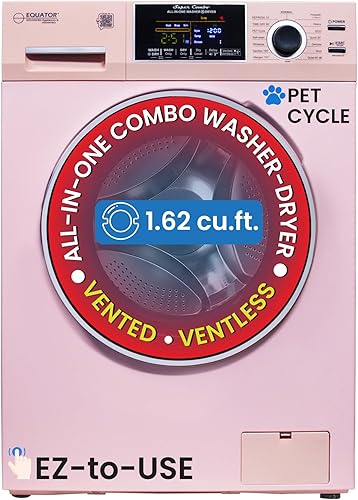
Equator Advanced Appliances EZ 4600 Washer Dryer Combo
$1259.00View on Amazon


Why Your Combo Leaves Clothes Damp
Overloading is the single most common reason a washer dryer combo fails to dry properly. After washing, the drum holds wet clothes that have absorbed water and increased in weight and bulk. If there is no room to tumble, hot air cannot move through the load. The outer layer of a dense pile dries while the inside stays wet. Ventless combos compound this because they rely on a condenser system to pull moisture from circulating air, and that process is far less efficient when lint clogs the filter or humidity in the room is already high. Vented models do better in principle, but only if the exhaust duct is clear and short. A kinked or partially blocked vent hose cuts airflow nearly as much as a sealed duct.
Ventless vs. Vented: Which Dries Better?
Vented combos expel moist air outside through a duct connection, which typically means faster drying at higher heat. They work best when the duct run is short and straight. Ventless combos use a condenser, either air-cooled or water-cooled, to collect moisture from the drum air and drain it away. They are easier to install, especially in apartments with no exterior vent access, but they take noticeably longer per cycle. The Equator EZ 4600, a vented model rated 4.7 stars, shows what a well-designed combo can do when the vent path is properly set up. If your ventless combo is struggling, the first step is always to reduce the load by at least a quarter and select the highest available drying temperature. That alone often resolves incomplete drying without any hardware changes.
Cycle Selection and Settings Matter
Many combo owners set the machine to a wash cycle and assume it will automatically switch to an adequate dry cycle. In practice, the default dry setting on many machines is a moderate heat level that works for lightly loaded drums but falls short for larger loads or dense fabrics. Check your model's manual for the difference between timed dry and sensor-based dry. If your combo has a sensor, make sure it is not coated with fabric softener residue, which insulates the sensor plates and causes the machine to terminate drying too early. Models like the Smeta SWF-120COMBO pair dedicated drying cycles with a 1400 RPM spin speed, which is important because a faster spin extracts more water before drying begins, directly reducing the time the dryer needs to finish the job.
Maintenance Checks Before Calling Service
Before concluding that something is mechanically wrong, run through a short checklist. Clean the lint filter, which on most combos should be cleared after every cycle but often is not. On ventless models, the condenser unit typically has a removable panel at the bottom of the door opening; wipe it free of any lint accumulation. Verify that the cold water supply line is properly connected on ventless machines that use cold water for condensation, because if the water is warm or the line is kinked, the condenser cannot cool efficiently and drying suffers. Also check the drain pump filter for small objects like coins or hairpins that can restrict the machine's ability to evacuate condensate water. These steps cover a surprisingly large share of drying complaints.
How to Choose a Combo That Dries Well
When comparing combos, three spec numbers carry the most weight: drum capacity, spin speed, and the presence of a dedicated sensor-dry mode. A larger drum allows clothing to tumble freely during the dry cycle, which is more important for drying than it is for washing. A spin speed of at least 1200 RPM removes more water before the heat even turns on, giving the dryer a shorter task. Sensor dry stops the cycle when the clothes are actually dry rather than running for a fixed time, which avoids both damp and over-dried results. The Smeta TWF-12A14LBMU offers 16 cycles and automatic operation, addressing the cycle-selection problem directly. The Smad FBM-DWF-120A14LBMU-4, rated 4.4 stars on average, provides another data point for consistent performance.
Top Recommended Models for Drying
Three combos stand out when comparing drying-relevant specs to owner rating patterns. The Smeta T-120A14L-US at $1199 offers a 2.8 cu ft drum and a 4.5-star rating, making it one of the stronger values at this price point. The Smeta TWF-12A14LBMU (2.7 cu ft, 4.0 stars) suits households that want automatic cycle management to reduce guesswork. The Equator EZ 4600 (1.62 cu ft, 4.7 stars) is the smallest of the three but earns its high rating partly because of its vented drying design, which moves moist air out rather than condensing it in place. For two-person households in an apartment setting, the Equator is worth the capacity tradeoff. For anything larger, the Smeta models make more sense.
Frequently asked questions
Why is my washer dryer combo not drying clothes completely?
The drum is likely overloaded. Combo dryers need space for air to circulate around each item. Also check the lint filter, the condenser on ventless units, and the vent hose on vented models. Try selecting a higher heat level or a longer timed dry and reduce load size by 25 percent.
How long should a washer dryer combo take to dry clothes?
Most combos need 60 to 120 minutes for a normally sized load at medium heat. Ventless models often run closer to 90 minutes. If a load is still damp after three hours, something is restricted or the load is too large for the drum.
Can you fix a washer dryer combo that won't dry?
Yes, many drying problems are fixable at home. Start with the lint filter, then check the condenser or vent hose. Make sure the water supply is cold on ventless models. If the heating element or thermostat is faulty, a technician is needed, but those failures are less common than maintenance-related causes.
Which washer dryer combo has the best drying performance?
Based on specs and owner rating patterns, the Equator EZ 4600 (4.7 stars, vented) and the Smeta T-120A14L-US (4.5 stars, 2.8 cu ft) are the standouts. The Equator benefits from vented drying; the Smeta suits households that need a larger drum.