Why Does My Portable Washer Smell and How to Fix It
Portable washers are prone to odors because their compact design traps moisture. Here is what causes the smell and what actually removes it.
A portable washer that smells bad has almost always developed mold or mildew in a damp spot the owner has not thought to clean. The drum gets the most attention but it is usually not where the odor originates. Drain hoses, pump filters, and the area under the lid rim are where mold colonies establish themselves first.
The compact size that makes portable washers so convenient is also what makes them smell faster than full-size machines. There is less interior volume to dilute moisture, and many models require manual draining that leaves residual water in hoses or sumps after each cycle. A few consistent habits eliminate most odors entirely, and a proper cleaning routine handles the rest.
Products mentioned in this post


Common Causes of Odors
Mold and mildew are responsible for the majority of portable washer odors, and they grow wherever moisture sits undisturbed. The most overlooked spots are the fold of the drain hose near the machine, the pump filter housing, and the underside of the lid or door. Residual water that does not drain completely after a cycle creates exactly the dark, wet environment mold needs. Using too much liquid detergent makes the problem worse, because excess soap that does not rinse out coats the drum interior and provides a food source for bacteria. Cold-water washing, which is energy-efficient and common, does not sanitize the drum the way hot water does, so bacteria accumulate faster in machines that never run a warm cycle. Hard water adds mineral deposits that trap soap residue and accelerate the buildup process.
How to Clean Your Portable Washer
Start with an empty hot-water cycle using two cups of white distilled vinegar poured directly into the drum. Run the full cycle, then open the machine and wipe down every accessible surface with a microfiber cloth: the drum walls, the agitator if there is one, the lid underside, and any rubber seals around the opening. Remove the drain pump filter, which is typically behind a small panel at the machine's base, and rinse away any compacted lint or debris. For persistent smells on rubber gaskets or seals, a paste of baking soda and water applied with a soft toothbrush and left for 15 minutes before rinsing can break down biofilm that a single wipe misses. After cleaning, leave the lid or door fully open and do not run another load for at least several hours. The interior needs to dry completely before moisture can start accumulating again.
Preventing Future Smells
The single most effective prevention is leaving the lid open after every cycle. This sounds simple but most people close the lid out of habit. A closed lid traps humid air and creates the conditions mold needs within hours. The second most useful habit is measuring detergent. Portable washers use less water per cycle than full-size machines, which means they need proportionally less soap. HE (high-efficiency) detergent is labeled specifically because it produces fewer suds and rinses out more completely in low-water environments. For semi-automatic machines like the Giantex EP21684, drain the wash tub fully after each use and rinse the drum quickly if it will sit idle for more than a day. Avoid leaving wet laundry in the machine once the cycle ends. The combined moisture from wet clothes and the damp drum is more than enough to start mold growth within a few hours.
When to Replace Your Portable Washer
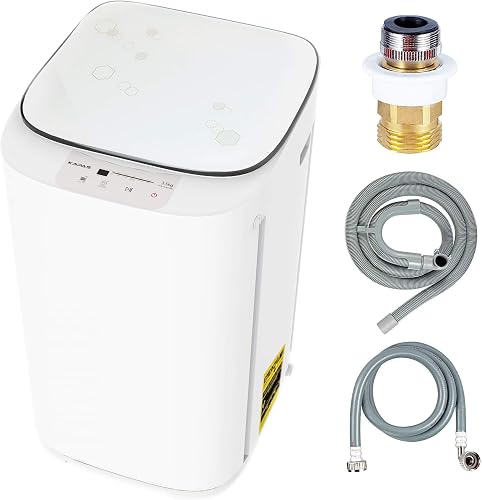
If cleaning removes the odor temporarily but it returns within a week or two despite consistent prevention habits, mold has probably established itself inside the drain hose, pump housing, or other internal components that are not accessible from the outside. At that point, continued cleaning addresses symptoms but not the source. Machines older than five years that have also developed mechanical issues are better candidates for replacement than deep cleaning. When shopping for a replacement, stainless steel drums are worth prioritizing. Stainless steel is non-porous, does not absorb odors, and resists the kind of surface buildup that feeds mold. Plastic drums are more common at lower price points but hold smells more persistently over time. Models like the Hamilton Beach HBPW3O2AMZ and the Kapas KPS35-735H2 both feature stainless steel drums and fully automatic cycles that drain more completely than semi-automatic designs.
Choosing a Portable Washer That Stays Fresh
Several design features predict how odor-resistant a portable washer will be over its lifetime. A stainless steel drum is the most important. A fully automatic cycle with a built-in pump drains more completely than a semi-automatic model where the user controls draining manually, leaving less residual water in the system. Multiple rinse cycles flush detergent residue more thoroughly, which removes one of the primary food sources for odor-causing bacteria. The Hamilton Beach HBPW3O2AMZ (3.0 cu ft, stainless steel drum, 12 cycles) and the Kapas KPS35-735H2 (stainless steel drum, 8 cycles) check most of these boxes. At the budget end, the Giantex EP21684 has a plastic drum but a 1350 RPM spin speed that extracts enough water per cycle to reduce post-wash moisture accumulation meaningfully.
The Role of Proper Ventilation
Where the machine lives matters as much as how it is maintained. Portable washers often end up in bathrooms, closets, or under kitchen counters, all of which tend to be humid and poorly ventilated. A machine that cannot dry out between cycles will develop odors even if it is cleaned regularly. If your washer lives in a bathroom, run the exhaust fan for 30 minutes after a laundry session. In a closet, prop the door open. In a kitchen, keep the washer away from the dishwasher and sink, both of which add humidity to the immediate area. A small dehumidifier or desiccant box near the machine helps in consistently damp spaces. Leaving the detergent drawer slightly open on machines that have one gives another path for moisture to escape as the interior dries.
Frequently asked questions
Why does my portable washer smell like sewage?
A sewage or sulfur smell almost always points to stagnant water sitting in the drain hose or pump housing. Check that the drain hose has no low-lying section where water pools, and confirm the pump filter is clear. Run a hot vinegar cycle to flush out accumulated bacteria and check that the machine empties completely at the end of each cycle.
Can I use bleach to clean my portable washer?
Yes. Run an empty hot cycle with half a cup of liquid bleach and no other cleaners. Bleach kills mold and bacteria effectively. Use it occasionally rather than routinely, because repeated bleach exposure degrades rubber seals faster than vinegar does. Alternate between bleach and vinegar treatments rather than using both in the same session.
How often should I clean my portable washer?
Once a month for the drum and filter if you use the machine at least weekly. For lighter use, once every two to three months is sufficient. Wipe the lid gasket and leave the lid open after every single use regardless of how frequently you clean the drum.
Does the type of detergent matter for preventing smells?
Yes, it matters a lot. HE detergent is formulated for low-water washing environments and produces fewer suds, both of which reduce residue buildup in the drum and hoses. Using standard detergent in a portable washer, or using too much of any detergent, leaves a film that traps moisture and feeds odor-causing bacteria.