Are Washer Dryer Combos Worth It?
Recommended picks
- Equator Advanced Appliances
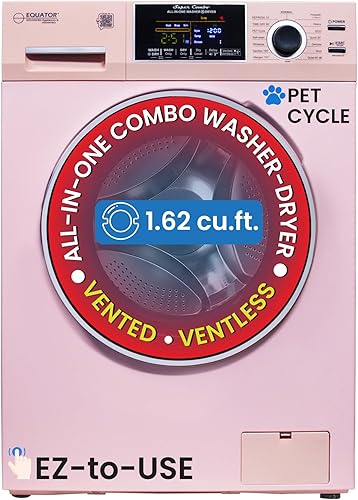
Equator Advanced Appliances EZ 4600 Washer Dryer Combo
$1259.00View on Amazon


What Is a Washer Dryer Combo?
A washer dryer combo is a single front-load appliance that washes and dries in the same drum. You load clothes once, select a combined cycle, and the machine runs the wash, spin, and dry phases without any intervention. Unlike a stacked pair where clothes transfer from washer to dryer, a combo never requires you to touch the laundry mid-cycle. Most combos are front-loading and ventless, using a condenser system to remove moisture from the drum air during drying. They operate on standard 110 or 120-volt outlets and need only a cold water supply and a drain connection. Because they are compact and vent-free, they are a practical option for apartments, condos, and small homes where a dedicated laundry room does not exist. The key limitation to understand up front is that effective drying capacity is typically around half the wash capacity, so a full drum of wet laundry may not dry completely in a single cycle.
Pros of Washer Dryer Combos
Space savings top the list of reasons buyers choose combos. The Smeta SWF-120COMBO at 25.2 x 23.4 x 33.5 inches occupies the floor area of one appliance, which makes it viable in studio apartments and small laundry closets where two machines simply do not fit. Installation is straightforward: one water connection, one drain, one standard outlet. No vent, no 240V circuit, no coordination with a plumber or electrician beyond standard washer hookup. Combos handle 1 to 2 person laundry volumes well, and models like the Smeta TWF-12A14LBMU offer 16 cycles for control over different fabric types. Ventless operation also means the combo can go in a bathroom, a kitchen corner, or any room with plumbing and power, without requiring access to an exterior wall.
Cons of Washer Dryer Combos
The primary disadvantage is cycle time. A combined wash and dry cycle runs 3 to 6 hours. Separate washer and dryer machines finish the same load in under 2 hours, and they can run simultaneously on different loads. Effective drying capacity being roughly half the wash capacity means you often need to remove some items before the dry phase or accept that heavier items in a full load will still be damp at the end. Repairs are also a consideration. Because one machine handles both functions, a dryer component failure means no drying until the unit is serviced. Initial cost can be higher than a comparable budget washer-dryer pair: the Equator EZ 4600 lists at $1,259 for 1.62 cu ft, which is expensive relative to drum size. Reliability data for many combo models is also thin, with review counts too low to reveal long-term patterns confidently. The Smeta T-120A14L-US, for example, holds a 4.5-star average but from only 4 ratings.
How Washer Dryer Combos Compare to Separate Machines
Separate machines have clear advantages on throughput and capacity. A full-size separate washer holds 4.5 cu ft or more, while the largest combo in this group tops out at 2.8 cu ft. A dedicated vented dryer finishes the same load in 40 to 60 minutes where a combo's drying phase takes 2 hours or more. Running a washer and dryer simultaneously on different loads is standard with separate machines and impossible with a combo. On the other hand, separate machines need more vertical or horizontal space, a 240V circuit or gas line for the dryer, and a vent duct to the exterior. For anyone without that infrastructure already in place, the installation cost and complexity of separate machines quickly narrows the comparison. The combo's all-in-one simplicity has genuine value for buyers who would otherwise have no in-unit laundry at all.
What to Look For in a Washer Dryer Combo
Start with capacity. A combo with at least 2.7 cu ft handles realistic loads for one or two people without requiring constant split cycles. The Smad FBM-DWF-120A14LBMU-4 and the Smeta models in the 2.7 to 2.8 cu ft range give you room to work with. Spin speed affects how much water remains in clothes before the dry cycle begins: 1400 RPM is a practical threshold. More wash cycles give you control over delicates, quick wash, and heavy duty settings. The drum should be stainless steel. Check the combined machine weight, since most combos exceed 150 pounds and the Smeta TWF-12A14LBMU is listed at 160 pounds, meaning two-person installation is the realistic plan. Review count matters for confidence: the Smeta TWF-12A14LBMU at 4.0 stars from 19 reviews has the largest rating sample in this group, which provides more reliable signal than models with 4 to 7 reviews.
Top Washer Dryer Combo Models to Consider
The Smeta SWF-120COMBO offers 2.7 cu ft, 16 cycles, and 1400 RPM spin for $1,399, with a 4.0-star average from 7 reviews. The Smeta T-120A14L-US provides 2.8 cu ft and 16 cycles at $1,199, earning a 4.5-star average from 4 reviews, making it the largest capacity option at a competitive price. The Equator Advanced Appliances EZ 4600 is the most compact at 1.62 cu ft and 6 cycles for $1,259, with a 4.7-star average from 7 reviews. The Smad FBM-DWF-120A14LBMU-4 lists at $1,187.05 with a 4.4-star average. All run on 110V or 120V and are front-loading. For the best balance of capacity and price among these options, the Smeta T-120A14L-US at $1,199 for 2.8 cu ft is the most efficient use of budget.
Is a Washer Dryer Combo Right for Your Household?
The fit depends on two factors: space and laundry habits. If you have no room for two machines and no laundry hookup that includes a 240V circuit or vent, a combo removes the most significant barriers to in-unit laundry. It is well suited to one-person and two-person households doing a few loads per week, particularly when flexibility on cycle timing means starting a load in the morning is not a problem. It does not suit families doing laundry for three or more people, anyone who regularly washes heavy or bulky items, or buyers who need laundry done quickly. If you answer yes to any of those last conditions, the time and throughput advantages of separate machines are worth the additional installation effort.
Installation and Maintenance Tips
Installation for most combos is manageable: cold water supply hose to the inlet, drain hose routed to a standpipe or sink, and the plug in a standard 120V outlet. Level the machine before running it; an unlevel combo vibrates excessively during spin and may walk across the floor. Clean the lint filter after every drying cycle. Ventless condenser drying produces more lint residue on the filter than a vented dryer, and a clogged filter extends drying times significantly. Run a monthly cleaning cycle with a machine cleaner or white vinegar to prevent mold and odor buildup in the drum. Avoid tilting the machine on its side during transport. Most manufacturers recommend keeping it upright to protect the motor and drum bearings during moves.
Final Verdict
For small-space dwellers who want in-unit laundry without the complexity of a vent installation or a 240V circuit, a washer dryer combo is a genuinely useful appliance. It is not as fast, as high-capacity, or as repairable as two separate machines, and buyers who go in knowing that tend to be satisfied. Buyers who expect full-size dryer performance in a compact ventless unit tend not to be. The Smeta T-120A14L-US at $1,199 for 2.8 cu ft is the strongest overall value in this group based on capacity and price. Confirm the specifications against your space before ordering, and check the most current buyer reviews for any model before committing.
Common mistakes to avoid
- Expecting the drying capacity to match the wash capacity. Most combos dry effectively at roughly half a full wash load; stuffing the drum leads to damp results.
- Planning laundry around a 1 to 2 hour timeline when a combined cycle actually runs 3 to 6 hours.
- Overloading the machine, which degrades both wash quality and drying performance in the same cycle.
- Ignoring weight and dimensions when ordering: many combos exceed 150 pounds and require two people and a firm floor to install safely.
- Skipping lint filter cleaning between drying cycles, which causes progressive cycle time increases and can trigger overheating shutoffs.
Frequently asked questions
Do washer dryer combos dry clothes completely?
Yes, for loads that are no larger than roughly half the drum's wash capacity. A full wash load run through the drying cycle will often come out with damp inner layers on heavier items. The practical solution is to wash a full load and then split it into two smaller drying rounds.
How long does a wash and dry cycle take?
Expect 3 to 6 hours for a full combined cycle. The drying phase accounts for most of that time since ventless condenser drying runs longer than a vented dryer. Quick wash settings reduce the wash phase but do not substantially shorten the dry phase.
Can I install a washer dryer combo in any room?
In practical terms, yes. The ventless design means no exterior wall access is required. You need cold water plumbing nearby, a drain connection, and a standard 110 or 120-volt outlet. That combination is available in most kitchens, bathrooms, and utility closets.
Are washer dryer combos energy efficient?
Front-load washing uses less water than top-loading, which reduces the energy needed to heat wash water. The drying phase runs longer than a vented dryer, consuming more electricity per cycle. For small loads done a few times per week, the total energy impact is reasonable. For large households doing daily laundry, separate machines are more efficient overall.
Do I need special detergent for a combo?
Use high efficiency (HE) detergent. Combos are front-loading and use less water than traditional top-loaders, so regular detergent will over-suds and can leave residue or extend rinse times. Use the amount the detergent manufacturer recommends for HE machines, not the standard dose.