How Do All in One Washer Dryers Work?
Recommended picks
- Equator Advanced Appliances
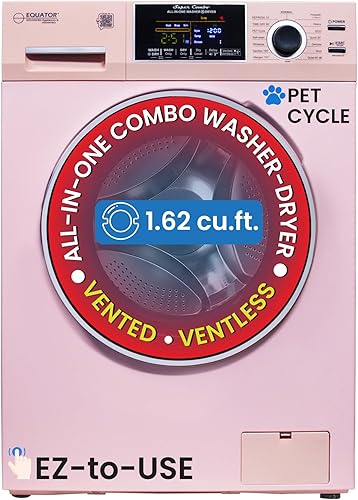
Equator Advanced Appliances EZ 4600 Washer Dryer Combo
$1259.00View on Amazon


What Is an All in One Washer Dryer?
An all-in-one washer dryer, also called a washer dryer combo, handles both functions in a single front-load drum. You load clothes once, select a combined cycle, and the machine washes, drains, spins, and then dries without interruption. There is no separate dryer unit, no transferring wet laundry, and no second machine taking up floor space. Most are compact enough to fit under a counter or in a closet. They operate on standard 120V power and use ventless condenser drying, so no duct to an exterior wall is needed. The Smeta SWF-120COMBO is an example of a 2.7 cu ft model with 16 wash cycles that illustrates what this category offers.
How Does the Washing Cycle Work?
The wash cycle in an all-in-one unit works the same way as any front-load washer. The drum fills with water, the machine adds heat if the cycle calls for it, and the drum rotates to tumble clothes through the wash water. After the wash phase, the machine drains and runs a spin cycle at high RPM to remove as much water as possible before drying begins. Models like the Smeta SWF-120COMBO reach 1400 RPM on the spin, which extracts more water than a slower spin and shortens the subsequent dry cycle. Cycle options typically cover the standard range: delicates, heavy duty, quick wash, and others depending on the model.
How Does the Drying Cycle Work?
After the spin cycle, the all-in-one unit transitions automatically to drying without pausing or asking you to do anything. The drying method is ventless condensation: the machine circulates warm or cool air through the drum to absorb moisture from the clothes, then routes that humid air over a heat exchanger or condenser coil where the water vapor condenses into liquid and drains away. The now-dry air recirculates through the drum again. Because no humid air is exhausted outside, the machine can be placed anywhere with a water connection and outlet. The trade-off is cycle time: ventless condenser drying is slower than a vented dryer, and the effective drying capacity is smaller than the wash capacity, which means a full wash load may not fully dry in a single drying pass.
What Are the Key Specs to Look For?
Wash capacity is the primary spec and ranges from 1.62 cu ft in smaller models to 2.8 cu ft in larger ones. The Equator Advanced Appliances EZ 4600 offers 1.62 cu ft with a 4.7-star average from 7 ratings. The Smeta T-120A14L-US provides 2.8 cu ft with a 4.5-star average from 4 ratings. Spin speed matters for how effectively water is removed before drying; 1400 RPM is a good benchmark. Number of cycles affects fabric care flexibility. All models in this category are front-load with stainless steel drums. Confirm the operating voltage is 110V or 120V before ordering: all-in-ones in this size range should not require a 240V circuit.
Pros and Cons of All in One Washer Dryers
The main practical advantage is the single-machine footprint. You get both washing and drying in the space a standalone washer would occupy. Ventless operation means installation requires only water, drain, and outlet connections. The convenience of loading clothes once and walking away until they are dry is genuinely useful in a busy household. The limitations are real too. Drying capacity is typically half the wash capacity, meaning you will either split loads or accept damp results on heavier items. Combined cycle times run 2 to 4 hours. If the unit breaks down, you lose both functions at once. And for anything larger than a small-to-medium load, the drying phase is noticeably slower than a dedicated vented dryer.
Ventless vs Vented Drying: What's the Difference?
All-in-one washer dryers are exclusively ventless. There is no version that exhausts humid air through a duct, because doing so would require a separate duct connection that defeats the purpose of the single-machine design. Ventless drying condenses moisture inside the machine, which keeps the installation simple but extends cycle times compared to a vented dryer. The lower drying temperatures common in condenser systems are also easier on fabrics than the higher heat of a conventional vented dryer. If you have the space for a stackable washer and vented dryer, you will get faster, more thorough drying. If you do not, an all-in-one combo offers the most compact and installation-friendly laundry solution available.
How Much Laundry Can You Wash and Dry at Once?
The wash capacity of models like the Smeta SWF-120COMBO at 2.7 cu ft translates to roughly 8 to 10 pounds of laundry, which covers a small load of everyday clothing. The drying limitation is the important part: effective drying capacity in an all-in-one unit is roughly half the wash capacity. Loading a full wash cycle and expecting the machine to dry it equally well is the most common reason buyers express disappointment. The practical approach is to wash a full load but remove some items before the dry cycle, drying in two rounds. For a single person doing laundry a few times a week, this workflow is manageable. For two people with a moderate laundry volume, it requires more planning but still works.
Installation Requirements for an All in One Washer Dryer
These machines need a cold water supply connection, a drain hose, and a standard 120V outlet. No 240V wiring, no external duct, no special plumbing beyond what a standard washer already needs. The unit must be level on a firm surface, which reduces vibration during spin cycles and helps the condensation drainage work correctly. Typical dimensions run around 24 inches wide, 24 inches deep, and 34 inches tall, which fits under a standard kitchen counter or in a laundry closet. Most models weigh around 150 pounds, so positioning requires two people. Leave a few inches of clearance around the unit for heat dissipation during drying.
How Do They Compare to Stackable Washer and Dryer Units?
A stackable pair gives you full-capacity washing in one machine and full-capacity, faster drying in another. You can run the washer and dryer simultaneously on different loads, which significantly increases laundry throughput. The stackable pair requires a dedicated dryer outlet (usually 240V) and a vent connection, plus more vertical height than an all-in-one unit. An all-in-one combo is simpler to install, cheaper in total purchase cost for a comparable capacity range, and requires less planning around electrical and venting infrastructure. For a couple in a small apartment doing a few loads per week, the all-in-one's convenience often outweighs the slower drying. For a household doing laundry daily, the speed advantage of a stackable pair becomes material.
Which Models Are Worth Considering?
The Equator Advanced Appliances EZ 4600 stands out for its 4.7-star average from 7 ratings. It has a 1.62 cu ft capacity and 6 cycles, making it the most compact and simplest option in this group. The Smeta T-120A14L-US offers the largest capacity at 2.8 cu ft with a 4.5-star average from 4 ratings. The Smeta TWF-12A14LBMU holds a 4.0-star average from 19 ratings, giving it the largest review sample of the group. All three operate on 120V. For a buyer who wants the best balance of capacity and review confidence, the Smeta TWF-12A14LBMU's larger rating sample provides the most reliable signal about day-to-day performance.
Common mistakes to avoid
- Loading a full wash load and expecting the drying cycle to finish it completely. Split the load in half or less before the dry cycle for best results.
- Neglecting the lint filter. Ventless dryers depend on clean airflow through the condenser system, and a clogged lint filter extends cycle times significantly.
- Using fabric softener or dryer sheets designed for conventional vented dryers. These can leave residue on the condenser components in ventless machines.
- Expecting drying times similar to a vented dryer. Plan for 2 to 4 hours per combined cycle, not 45 to 60 minutes.
Frequently asked questions
Do all in one washer dryers need a vent?
No. All-in-one washer dryers use a ventless condenser system that removes moisture from the drum air and collects it internally, either in a reservoir you empty or through a drain hose. No external duct or exterior wall access is required.
Can you wash and dry at the same time in an all in one washer dryer?
No. The machine uses one drum for both functions and runs them sequentially. It washes, spins, and then transitions to drying without load transfer, but it cannot do both simultaneously.
How long does a typical wash and dry cycle take?
A full combined wash and dry cycle typically takes 2 to 4 hours depending on the load size, fabric weight, and selected cycle. Drying accounts for most of that time, since ventless condensation works more slowly than a vented dryer.
Are all in one washer dryers energy efficient?
They use less energy overall than running two separate full-size machines for the same small load. However, the extended drying cycle means they consume more electricity per load than a dedicated vented dryer would for the same output. For small households doing modest laundry volume, the total energy impact is reasonable.
Can you install an all in one washer dryer in an apartment?
Yes, and this is one of the primary use cases for these machines. They need only a cold water connection, a drain, and a standard 120V outlet. No venting modification to the apartment is needed. Under-counter installation is common, and the compact footprint works well in studio and one-bedroom apartments.