Front Load vs Top Load Washer: Which Is Better for Your Home?
Recommended picks


The Core Difference: How Each Washer Works
A front-load washer cleans clothes by tumbling them through a shallow pool of water at the bottom of a horizontal drum. Gravity does most of the work: clothes lift up and drop back into the water repeatedly throughout the cycle. This mechanism uses relatively little water and is inherently gentle. A top-load washer uses a vertical drum and either a central agitator with fins or a low-profile impeller disc to move clothes through a tub that fills with water. Agitator models fill more completely and apply more mechanical scrubbing, while impeller models use less water but a more turbulent action. Front-load machines typically spin at 1200 to 1400 RPM, extracting significantly more water than most top-load spinners running at 700 to 800 RPM. That difference in spin speed translates directly into shorter dryer cycles.
Space and Installation: Front Load Wins for Stacking
Front-load washers have a flat top surface and a door that opens from the front, so a matching dryer can be mounted directly above using a stacking kit. This arrangement saves the entire floor footprint of one appliance, which matters in laundry closets, condos, and small apartments. The Equator EW826 and ED 852 stacked laundry centre is one example of this configuration. Top-load washers require an unobstructed opening above the drum, so nothing can be placed on top or directly overhead. Side-by-side installation is the only layout that works for top-loaders. Front-load machines also offer a flat work surface for folding when they are not running. Measure your space in three dimensions before deciding; vertical clearance can be the deciding factor.
Water and Energy Efficiency: Front Load Is the Clear Winner
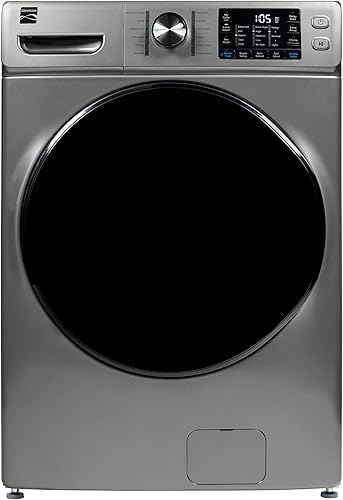
Front-load washers use less water per cycle because they only need enough to saturate clothes at the base of the drum rather than filling the tub entirely. That reduces water consumption and, when warm or hot cycles are used, the energy needed to heat that water. Most front-load models carry Energy Star certification. The Kenmore 2642273 front-load washer at 4.5 cubic feet is a representative example. Standard top-load washers with agitators use considerably more water per load. High-efficiency top-load models with impellers are an improvement, using less water than agitator designs, but they still consume more than a front-load machine in most published comparisons. If your utility costs are high or your household runs many loads per week, the front-load efficiency advantage compounds meaningfully over time.
Cycle Time and Wash Performance: Top Load Is Faster
Top-load washers typically complete a normal wash cycle in 30 to 50 minutes. Front-load washers run longer, often 60 to 90 minutes per cycle, because the tumbling action and lower water temperatures require more time to achieve comparable soil removal. If running a quick load before work is a regular need, a top-load washer fits that routine more naturally. That said, many front-load models include a rapid cycle option that finishes in 15 to 30 minutes for lightly soiled loads. For heavily soiled work clothes or muddy outdoor gear, front-load tumbling action can be more effective than an agitator for dislodging grit from woven fibers, though for sheer mechanical scrubbing of very dirty items, some traditional agitator machines still have an advantage.
Price and Value: Top Load Is More Budget Friendly
Top-load washers generally cost less to buy. A reliable agitator model like the Amana NTW4516FW runs around $588. A comparable front-load machine like the Kenmore 2642273 costs $1,149.99. The upfront gap is real and meaningful for buyers on a fixed budget. Over time, the water and energy savings from a front-load machine can partially or fully close that gap, depending on local utility rates and weekly load volume. Someone who does eight loads a week in an area with high water costs will recoup the difference faster than someone doing three loads a week. Front-load machines also tend to have higher spin speeds, leaving clothes drier and reducing time in the dryer, which is another operating cost the headline price does not capture.
Maintenance and Mold: Front Load Requires More Care
The rubber gasket around a front-load door seal can trap water, lint, and detergent residue between uses if the door is kept closed. That creates conditions for mildew and an associated musty smell. Preventing it requires leaving the door ajar after every cycle, wiping the gasket dry periodically, and running a monthly drum-cleaning cycle. Some models have a self-clean setting designed for this. Top-load washers dry out faster because the lid sits at the top and air circulates freely. Mold problems in top-loaders are less common, though not impossible in high-humidity environments. If you find routine appliance maintenance easy to neglect, the simpler upkeep of a top-load machine is worth factoring into the decision.
Ergonomics and Loading: Top Load Is Easier on Your Back
Loading a top-load washer means reaching straight down into the drum from a comfortable standing position, which most people find natural and low-effort. Front-load washers position the door at the front near floor level, requiring you to bend or squat to reach the back of the drum. Over hundreds of loads per year, that difference in body position matters, particularly for anyone with lower back problems or limited mobility. A pedestal raises a front-load washer 12 to 16 inches off the floor, bringing the door to a more comfortable height and adding under-unit storage space. Pedestals are sold separately and add to the total cost, but they make front-load ergonomics comparable to top-load for most adults.
Gentleness on Clothes: Front Load Is Superior
Because front-load washers lift and tumble clothes rather than driving them against an agitator post, they produce less friction on fabric fibers. Delicate items, synthetic blends, wool-care pieces, and dark colors that fade from abrasion all fare better over time in a front-loader. Traditional agitator top-load machines can cause pilling on knit fabrics, stretching on lighter items, and fraying along garment seams with repeated washing. High-efficiency top-load impeller machines are a step gentler than agitators, but they still create more turbulence than the rolling tumble of a front-load drum. For a wardrobe with a significant proportion of items that need careful treatment, the front-load advantage in fabric care is practical and measurable over a machine's lifetime.
Noise and Vibration: Front Load Can Be Quieter
Front-load washers are typically better balanced during the spin cycle because the horizontal drum has a lower center of gravity and the weight distributes more evenly. Many models run at 55 to 60 dB, which is audible but not disruptive from an adjacent room. The Kenmore 2642273 is rated at 60 dB. Top-load washers with agitators can be noisier, particularly during the agitation phase when the mechanism reverses direction repeatedly. The Amana NTW4516FW, by contrast, is rated at a notably quiet 44 dB. Noise performance varies enough between individual models that checking the published decibel rating is more useful than generalizing by type. For both front-load and top-load, proper leveling of the machine on installation reduces vibration and walking considerably.
Capacity and Load Size: Front Load Holds More in Less Space
Front-load washers often offer large drum capacities without requiring a correspondingly wide machine, because the drum extends horizontally into the depth of the unit. A standard front-load machine like the Kenmore 2642273 at 4.5 cubic feet handles comforters and large loads of towels without strain. Top-load machines with agitators use central column space for the agitator post, which reduces the effective usable volume. A 4.5 cubic foot agitator top-loader holds less bulk laundry in practice than the same rated capacity in a front-loader. High-efficiency top-loaders without agitators recover some of that space. For compact units at the small end, the Magic Chef MCSTCW09W2 offers 0.9 cubic feet in a narrow top-load form factor suited to very limited spaces.
Common mistakes to avoid
- Assuming all top-load washers use an agitator post when many current high-efficiency models use a flat impeller instead.
- Dismissing front-load washers as always slow, without accounting for quick-wash cycles that finish in under 30 minutes.
- Ordering a front-load washer without measuring door-swing clearance, then finding it cannot open fully in the laundry area.
- Comparing only the purchase price without considering whether the front-load energy savings will offset the price difference over the machine's useful life.
- Ignoring spin speed specifications and then being surprised that clothes from a 700 RPM top-load take much longer to dry than expected.
Frequently asked questions
Which type of washer lasts longer, front load or top load?
Front-load washers generally have a longer published lifespan, often cited at 10 to 13 years versus 8 to 12 for top-loaders. Front-loaders have fewer moving mechanical parts in the agitation system. However, they require more consistent maintenance to prevent mold, and top-loaders are sometimes simpler and less expensive to repair when a part does fail.
Can I use a front-load washer without a pedestal?
Yes. A pedestal is an optional accessory that raises the machine to a more comfortable loading height and adds under-unit storage drawers. Without one, you bend down to the door, which sits close to floor level. Pedestals are sold separately, add 12 to 16 inches of height, and increase the overall cost.
Are top-load washers better for large families?
Not necessarily. Front-load washers often offer the largest capacities available, and their ability to handle bulky loads like comforters is well suited to family-size laundry. Top-load agitator models have less usable drum space because the agitator takes up the center. For large families, a high-capacity front-load machine with a quick-wash cycle often handles the volume efficiently.
Do front-load washers use less detergent?
Yes. Because front-load washers use less water, they require a smaller amount of detergent per cycle. High-efficiency detergent labeled HE is recommended because regular detergent creates excess suds in low-water machines, which can reduce cleaning effectiveness and cause residue buildup in the drum and pump.
Is it safe to leave wet clothes in a top-load washer overnight?
It is not recommended for either type. Clothes left in water develop mildew and an unpleasant odor relatively quickly, particularly in warm weather. Front-load machines are somewhat more prone to this issue because the sealed door traps humidity inside, but top-load washers are not immune. Transfer clothes to the dryer as soon as the cycle ends.