High Efficiency vs Traditional Washer: Which One Should You Choose?
Recommended picks

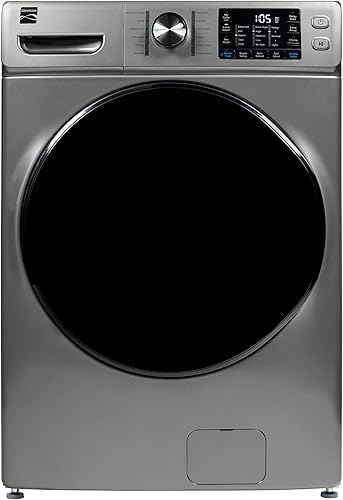
How High Efficiency Washers Work
High-efficiency washers, whether front-load or certain top-load designs, clean clothes through tumbling or low-water impeller action rather than filling a tub completely. A front-load HE machine like the Kenmore 2642273 tumbles clothes through a shallow pool at the base of the drum repeatedly throughout the cycle. A top-load HE machine with an impeller, like the Equator Advanced Appliances 22-826 L W, uses a disc at the drum floor to create a rolling water current. Both approaches use substantially less water than a traditional agitator machine, roughly 20 to 30 percent less in most published comparisons. Because less water is heated, energy consumption drops as well. HE machines also spin at higher speeds, typically 1200 RPM or more, which removes more moisture and shortens dryer time. These machines require HE-labeled detergent: the low-suds formula is designed to rinse cleanly in a low-water environment.
How Traditional Washers Work
Traditional washers, almost always top-load designs with a central agitator, fill the drum with enough water to submerge the full load. The agitator reverses direction repeatedly to drive clothes through the water and dislodge soil. Water use per cycle is higher, often 30 to 45 gallons compared to an HE machine's 15 to 20, and the spin speed is lower, typically 700 to 800 RPM, leaving clothes wetter after the cycle. Cycle times are shorter, usually 30 to 45 minutes, which suits households that prefer to run laundry quickly. The Amana NTW4516FW illustrates the traditional model well: 3.5 cubic feet, 8 cycles, simple push-button controls, and a price around $588. Traditional machines are also generally more straightforward to repair when something fails.
Key Differences in Cleaning Performance
Traditional agitator washers provide more mechanical scrubbing, which is effective for heavily soiled loads like work uniforms, outdoor gear, and muddy children's clothes. The Amana NTW4516FW's 3.5 cubic foot drum and heavy-duty cycle option handles this kind of load reliably. HE washers compensate with sensor-adjusted cycles, longer soak times, and in higher-end models, steam capabilities. The Kenmore 2642273 offers 12 cycles including steam, which penetrates fabric fibers and loosens stains without the mechanical aggression of an agitator. For normal everyday laundry, the difference in cleaning outcome between a well-designed HE washer and a traditional model is minimal with proper cycle selection. For consistently heavy soil, the traditional agitator has a practical edge.
Cost Comparison: Purchase Price and Operating Costs
Traditional washers cost less to buy. The Amana NTW4516FW at $588 and the Avanti STW30D0W at $640 represent typical entry to mid-range traditional pricing. HE washers start around $800 for basic models and climb to $1,150 for the Kenmore 2642273 front-load or $1,649 for the Equator EW826 stacked laundry combination. The operating cost picture looks different. HE machines save $30 to $50 or more per year on water and electricity depending on local utility rates and how many loads are washed weekly. Over a decade of use, that savings compounds and can narrow or close the upfront price gap. Buyers who do many loads and live in areas with high utility costs see a faster return on the HE investment. Buyers who do fewer loads or have low utility rates may find the traditional machine more economical overall.
Maintenance and Longevity Differences
HE front-load washers require consistent maintenance to prevent mold and mildew in the door gasket. Leaving the door ajar after every cycle, wiping the rubber seal monthly, and running a drum-cleaning cycle every few months prevents most odor problems. Traditional top-load washers dry out faster between uses and are less prone to the mold issue, though they are not entirely immune in high-humidity environments. Agitator mechanisms have moving parts that can wear over time, but both machine types typically last 10 to 14 years with proper care. The Kenmore 4.5 cubic foot top-load washer offers a middle path: HE features including higher spin speed and lower water use in a top-load form factor that dries out faster than a front-load design.
Space and Installation Considerations
Traditional top-load washers need overhead clearance to open the lid: the lid swings up, requiring at least as much vertical clearance above the drum as the lid is long. They also need standard water supply connections and a drain standpipe. HE washers come in both front-load and top-load configurations. Front-load HE machines can be stacked with a matching dryer using a stacking kit, eliminating one appliance's floor footprint. The Equator EW826 and ED 852 stacked combination is a practical example for tight spaces at 1.6 cubic feet. Portable HE-compatible machines like the Krib Bling XQB-Grey6-1 or the Auertech AU8590 add the option of no permanent installation. If floor space is the primary constraint, a compact front-load HE machine provides the most capacity in the smallest footprint.
Cycle Options and Customization
Traditional washers typically offer 5 to 10 cycles covering the basics: normal, heavy, delicates, quick, and rinse-spin. The Avanti STW30D0W has 6 cycles, which handles most household needs without confusion. HE machines tend to offer more specialized programming. The Kenmore 2642273 has 12 cycles including steam, allergen, and sanitize options. The KoolMore FLW-5CWH also has 12 cycles with temperature and spin-speed customization. Some HE models include smart-home connectivity: the O3Waterworks LM201 is smart-home compatible, though this remains uncommon across the category. If your laundry mix is consistent and straightforward, extra cycles add little practical value. If you regularly wash items with specific care requirements, the broader cycle selection on an HE machine is useful.
Which One Fits Your Household Size and Lifestyle
For one or two people with moderate laundry volume, a compact HE portable like the Krib Bling KB03-GREY9 at 25 pounds capacity, or a budget traditional portable like the Auertech AU8590 at 28 pounds, covers weekly needs without excess. For families of three or more, a full-size machine in either category makes more sense. The Amana NTW4516FW at 3.5 cubic feet suits medium households at a traditional price point; the Kenmore 4.5 cubic foot front-load HE model provides larger capacity and better efficiency for heavier use. If short cycle times are important because your schedule is tight, traditional washers average 30 to 45 minutes versus 60 to 90 for most HE models on a normal cycle. If gentle fabric care and lower utility bills matter more, HE is the clearer choice.
Common mistakes to avoid
- Using regular detergent in an HE washer, which creates excess suds that reduce rinsing effectiveness and can leave residue on clothes.
- Overloading a traditional agitator machine, which prevents clothes from moving freely and results in poor cleaning and added strain on the mechanism.
- Keeping the front-load HE door closed between cycles and then dealing with mold and odor problems that develop in the sealed gasket.
- Assuming all top-load washers are traditional when many current top-load designs are HE models with impellers and no agitator post.
- Making the purchase decision on sticker price alone without accounting for the long-term utility cost difference between the two machine types.
Frequently asked questions
Can I use HE detergent in a traditional washer?
Yes. HE detergent is low-sudsing and works in both HE and traditional machines. In a traditional washer, it cleans effectively and may slightly reduce residue buildup compared to regular detergent. Using regular detergent in an HE machine is the problematic direction: too many suds in a low-water environment reduces cleaning performance.
Do high efficiency washers clean as well as traditional washers?
For everyday clothing and standard soil levels, yes. Modern HE machines use sensors and extended cycle times to compensate for less water and mechanical agitation. For heavy soil loads, traditional agitator machines retain a slight edge. Many HE models offer heavy-duty and steam cycles that close the gap for most situations.
Are front-load washers always high efficiency?
Yes. All front-load washers use a tumbling action that requires very little water relative to the load size, which meets the definition of high efficiency. Many top-load washers are also HE, particularly those without a central agitator. The HE designation on the label confirms that the machine meets energy and water use thresholds.
Which type of washer is better for small apartments?
For small apartments, a compact front-load HE washer is often the most practical choice because it can be stacked with a dryer or placed under a counter. Portable HE-compatible machines like the Krib Bling line give renters without laundry hookups an alternative. Traditional top-loaders need vertical clearance that some apartment layouts cannot accommodate.