Gas vs Electric Dryer: Which Should You Choose?
Recommended picks

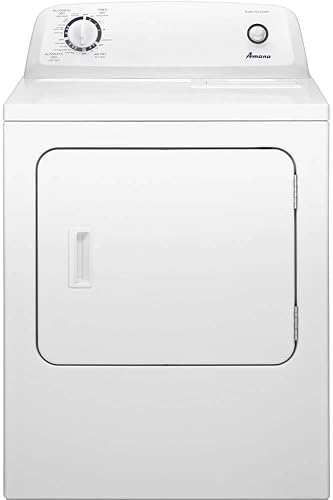
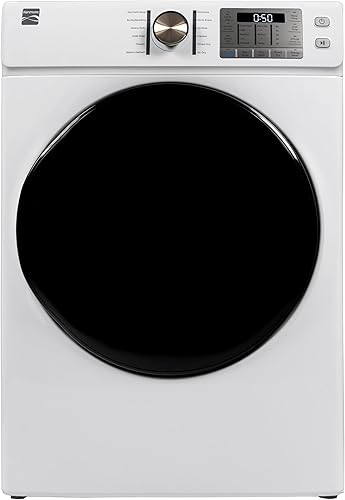
Electric Dryers Are Simpler and More Affordable Upfront
Electric dryers connect to a 240V outlet, which most modern homes with a dedicated laundry area already have. No gas line, no combustion risk, no additional trade to hire. The purchase prices reflect this accessibility. The Amana NED4655EW at $589.88 for 6.5 cu ft and the Magic Chef MCSDRY1S at $347.22 for 2.6 cu ft show the breadth of what is available electrically. As a rule, comparable electric models cost $100 to $300 less than their gas counterparts at the shelf. The trade-off comes over time: electricity rates in most areas mean each drying cycle costs more than it would with natural gas, so the cheaper purchase price gradually gets offset by higher utility bills.
Gas Dryers Cost Less to Run and Dry Faster
Natural gas and propane burn at a lower cost per BTU than grid electricity in most U.S. markets, which translates directly into lower drying costs. Gas dryers also reach operating temperature faster, trimming roughly 10 to 15 minutes off a typical cycle compared to equivalent electric models. The Kenmore 8.0 cu ft front load gas dryer at $1,199.99 shows what the top of the gas range looks like: high capacity, proven performance, and energy costs that come in $100 to $200 per year below an equivalent electric setup. That said, gas dryers require a dedicated gas line and must be vented to the outside, so anyone without existing gas infrastructure faces a significant installation cost before the machine even runs.
Installation Requirements Differ Significantly
An electric dryer needs a 240V outlet, commonly a NEMA 14-30R receptacle. Most homes with a laundry hookup have one. If the outlet is missing, an electrician can add it for roughly $200 to $500. Gas dryers need that same 240V circuit for the motor, lights, and controls, plus a dedicated gas line with a shut-off valve. Adding a gas line from scratch costs $500 to $1,500 depending on distance and local labor rates. Both types need a 4-inch exhaust duct running to the outside. Compact electric models like the Magic Chef MCSDRY1S can sometimes use an indoor vent kit with a lint trap, but full-size gas and electric units should always vent outdoors.
Performance: Gas Heats Faster, Electric Is More Consistent
Gas burners respond almost immediately, so the drum reaches working temperature within the first few minutes of a cycle. That speed advantage over electric is most noticeable when running back-to-back loads, where gas keeps pace more easily. Electric heating elements warm up more gradually but hold a steady temperature throughout the cycle, which tends to be gentler on fabrics, especially synthetics and delicates. High-heat gas cycles can be harsher if the dryer lacks a proper cool-down stage. Many current gas models include moisture sensors and cool-down phases to address this, but the core tradeoff between speed and even heat still favors gas for volume and electric for consistency.
Moisture and Lint Management: Venting Is Critical for Both
Both types produce lint that must be captured in a filter and exhausted as hot, moist air that must exit the home. For gas dryers, venting is even more critical: incomplete combustion or a blocked exhaust duct can allow carbon monoxide to build up indoors, which is a serious safety risk. Electric dryers do not produce combustion gases, so a blocked duct is a fire and moisture hazard but not a carbon monoxide hazard. Compact electric models like the Magic Chef MCSDRY35W at 3.5 cu ft and the Costway VD-23598EP at a 10-pound load capacity sometimes use a ventless condenser system that keeps the installation flexible. Ventless gas dryers are effectively unavailable for residential use.
Total Cost of Ownership: Gas Wins in the Long Run
The numbers favor gas if you stay in one place long enough. The Amana NED4655EW at $589.88 running at roughly $200 per year in electricity costs about $1,590 over five years. The Kenmore gas dryer at $1,199.99 with approximately $100 per year in gas costs about $1,700 over the same period. That makes electric slightly cheaper over a five-year window. Stretch to ten years, and gas begins to pull ahead. These figures assume typical usage rates and average national utility prices, which vary meaningfully by region. Where electricity is expensive and gas is cheap, the gas breakeven happens sooner. Where utility rates are similar, the difference may not be worth the added installation complexity.
Size and Capacity Options Are Similar Between Types
Both gas and electric dryers cover the full size range, from compact portables to large-family full-size units. Compact electric models include the Auertech AU205CGY at 2.6 cu ft for $219.99 and the CTT CTTP10-White at 3.5 cu ft for $233.99. On the full-size electric end, the Westland WDV2200XCD handles an 11-pound load at $1,414.94. Gas models are almost exclusively full-size, since compact gas dryers are rarely manufactured. The Splendide DV6400X at $1,163.49 is a ventless electric compact that fits under a counter, an option that has no real gas equivalent. If compact or portable sizing is important to you, electric is your only practical path.
Environmental Impact: Gas Emits More Carbon, Electricity Varies by Grid
Gas dryers combust natural gas at the point of use, producing carbon dioxide and small amounts of nitrogen oxides. Electric dryers shift the emissions to the power plant level, where the mix depends on your local grid. In areas served heavily by renewables or nuclear power, electric dryers carry a smaller carbon footprint per load. On the average U.S. grid, gas dryers emit roughly 1.5 times more CO2 per load than electric dryers. That ratio will continue to change as the grid gets cleaner. Buyers who prioritize reducing household emissions and live in states with clean electricity should lean toward electric. Those on grids with high coal or natural gas generation close the gap considerably.
Common mistakes to avoid
- Assuming the home already has a gas line in the laundry area without checking first
- Choosing a gas dryer without pricing out the gas line installation, which can add $500 to $1,500
- Buying a compact 120V electric model like the Magic Chef MCSDRY1S expecting it to handle full-size loads efficiently
- Skipping proper venting on a gas dryer, which creates a carbon monoxide risk indoors
- Overlooking the fact that most compact dryers are not designed to stack with a full-size washer
Frequently asked questions
Can I convert an electric dryer to gas?
No. The heating system, gas valve, and wiring are fundamentally different between the two. There is no conversion kit or retrofit that makes it practical. If you want to switch fuel types, you buy a new dryer.
Do gas dryers need a 240V outlet?
Yes. The gas provides heat, but the drum motor, controls, and interior light still run on electricity. Gas dryers need a 240V outlet, the same type as an electric dryer, though they draw less current overall since they are not using electricity for heat generation.
Which type of dryer is safer: gas or electric?
Both are safe when properly installed and maintained. Gas dryers carry a carbon monoxide risk if the vent is blocked or the burner malfunctions, making routine duct cleaning and a working CO detector important. Electric dryers primarily pose a lint fire risk if the duct is not cleaned regularly. Neither type is inherently more dangerous when installation is done correctly.
Are ventless dryers available in gas?
Not for practical home use. Ventless drying requires condensing moisture inside the machine, and combining that with gas combustion creates venting complexity that manufacturers have not brought to the residential market in any meaningful way. If you need a ventless dryer, choose an electric model.