Heat Pump vs Condenser Dryer: Which One Should You Choose?
Recommended picks


Heat Pump Dryers: How They Work and Key Benefits
A heat pump dryer moves refrigerant through a closed loop to manage temperature: it heats the drum air to absorb moisture from clothes, then cools that air over an evaporator coil to condense the water into a collection tank or drain. The now-dry air is reheated and recirculated. Because the system reuses heat rather than generating new heat for each cycle, it uses significantly less electricity than either a condenser or a vented dryer. Operating temperatures are lower, typically in the 120 to 130 degree Fahrenheit range, which reduces shrinkage and wear on synthetic fabrics and delicates. The downsides are a higher purchase price and longer cycles. The Splendide DV6400X, a compact ventless model, illustrates the higher price point common in this product space.
Condenser Dryers: How They Differ and When to Choose One
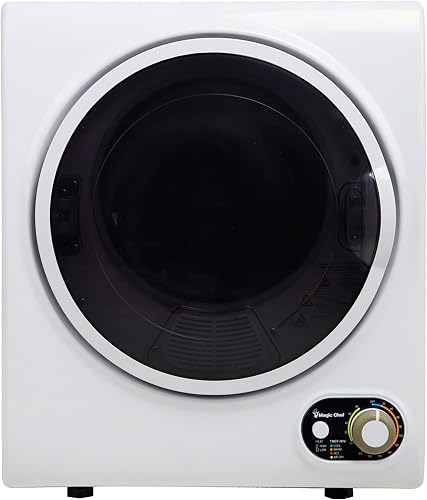
A condenser dryer uses an electric heating element to warm drum air, then routes the moist exhaust over a cold heat exchanger to condense the water into a tank or drain. Unlike a heat pump, the condenser design does not recycle heat: warm, moist air is cooled down, the water removed, and then fresh air is heated again from scratch each pass. This makes condenser dryers less efficient than heat pump models but still ventless, which is often the deciding factor for apartment dwellers and renters. Models like the Magic Chef MCSDRY1S at $347 for 2.6 cu ft and the Costway VD-23598EP at $185 for a 10-pound load capacity occupy the affordable end of the condenser category. They suit small spaces and occasional use without requiring a duct installation.
Energy Efficiency and Operating Costs: Heat Pump Wins
The efficiency gap between heat pump and condenser dryers is real and meaningful. Heat pump dryers typically use about 50% less electricity per cycle by recycling heat instead of producing it continuously. Over several years of regular use, that savings can be substantial. Condenser dryers, by contrast, run a heating element that consumes power in proportion to how long the cycle runs, and condenser cycles are generally shorter than heat pump cycles but not short enough to close the efficiency gap. The Amana NED4655EW, a vented dryer at $590, illustrates the conventional heating approach that condenser dryers share. Heat pump models often start higher in price, so the payback period depends on how many loads per week you run and your local electricity rate.
Installation and Space Requirements: Ventless Flexibility
Both heat pump and condenser dryers are ventless, which is their most important shared characteristic for buyers who cannot run a duct to an exterior wall. Both need only a standard electrical outlet and a level floor. Both produce water that either fills a collection tank you empty after each cycle or drains through a hose if you have a nearby drain. Compact condenser models like the Magic Chef MCSDRY15W at 1.5 cu ft and roughly 38 pounds can sit on a counter. Full-size models like the Westland WDV2200XCD at 155 pounds need floor space and structural support. Measure carefully: the difference between a unit that fits in a laundry closet and one that does not can be a matter of a few inches on width or height.
Cost Comparison: Upfront Price vs Long-Term Savings
Condenser dryers are the less expensive entry point. The Costway VD-23598EP is around $185 at the portable level, and the Magic Chef MCSDRY1S is $347 for a compact unit. Heat pump dryers generally start around $800 and can exceed $1,200 for full-size models. That gap is real, and for light or occasional users, the electricity savings may never fully offset the higher purchase price within a typical appliance lifespan. For heavier users doing four or more loads per week, the energy savings on a heat pump model can reach $50 to $100 annually, making the payback horizon more realistic over a seven to ten year ownership period. Price out both at the capacity you actually need before deciding.
Fabric Care and Drying Performance: Heat Pump Is Gentler
Heat pump dryers operate between roughly 120 and 130 degrees Fahrenheit. Condenser dryers using a traditional heating element can reach 140 to 150 degrees, which is harder on synthetic fibers, wool, and delicates. The lower and more consistent heat of a heat pump cycle reduces pilling, shrinkage, and color fading over repeated washings. Condenser dryers work fine for durable everyday fabrics but carry more risk with temperature-sensitive items. On cycle options, the Amana NED4655EW with six cycles and the Magic Chef MCSDRY35W with multiple settings show what condenser-style dryers typically offer. Heat pump models may have specialized delicate cycles but often have fewer total options. If speed matters most and your wardrobe is mostly cotton and polyester, a condenser dryer is adequate.
Popular Models and What Buyers Say
Among condenser dryers, the Magic Chef MCSDRY1S carries a 4.2-star average across roughly 1,200 ratings, which is a credible sample for a compact unit. The Costway VD-23598EP earns 4.2 stars from about 110 ratings, reflecting solid satisfaction for a budget portable. The Splendide DV6400X earns 4.5 stars but from only 28 ratings, making that average harder to rely on. The Kenmore 8.0 cu ft dryer holds a 4.8-star average from 15 ratings, but it is a vented electric or gas model rather than a heat pump. In the ventless category, the Westland WDV2200XCD reportedly attracted more than 2,200 purchases in a recent month, suggesting strong demand for capable ventless units. Buyer patterns show condenser models dominating the apartment and small-space segment because of lower entry cost, while heat pump buyers cite long-term energy savings as the primary motivation.
Which Type Should You Buy? A Decision Framework
Start with venting: if you cannot duct to the outside, you need either a heat pump or a condenser dryer. Next, set a budget. Under $400, condenser dryers are your only ventless option. Between $600 and $1,200, heat pump models enter the picture. Then consider laundry volume. For one or two people running a few loads per week, a compact condenser like the Magic Chef MCSDRY15W at 1.5 cu ft or the Auertech AU205CGY at $220 with a 4.3-star average handles the load at a manageable price. For families doing four or more loads weekly, the energy savings of a heat pump become meaningful enough to justify the higher upfront cost. Finally, factor in fabric types: if you regularly wash delicates, wool, or performance synthetics, the lower operating temperature of a heat pump dryer is worth paying for.
Common mistakes to avoid
- Treating all ventless dryers as the same technology. Heat pump and condenser dryers differ substantially in energy use, operating temperature, and price.
- Expecting a condenser dryer to save money on electricity. Condenser dryers use more power per cycle than heat pump models; they save money only compared to running a separate wash-and-dry setup.
- Forgetting to empty the water tank. Both types collect condensed moisture that must be drained after each cycle, or the machine stops when the tank is full.
- Buying a ventless dryer without confirming physical dimensions against the installation space, especially for full-size units that can weigh over 150 pounds.
- Dismissing the cycle time difference. Heat pump dryers take 30 to 50% longer per cycle; if you need quick turnaround, a condenser or vented dryer fits the schedule better.
- Ignoring room heat buildup. Condenser dryers release warm air into the room, which in a small, poorly ventilated space can make the laundry area noticeably uncomfortable.
Frequently asked questions
Do heat pump dryers need a drain?
Most heat pump dryers include a water collection tank you empty after each cycle. Many models can also be connected to a floor drain for automatic drainage, which removes the need to manually empty after every load. Check the product specs for your specific model to confirm the drain option.
Are condenser dryers more expensive to run than vented dryers?
Generally yes. Condenser dryers use an electric heating element and must run it for the entire cycle, which consumes more electricity than a vented dryer that exhausts moist air quickly and shuts off sooner. Heat pump dryers are the exception: they use less electricity than both vented and condenser models.
Can I use a condenser dryer in a small apartment?
Yes. Condenser dryers are ventless, which makes them suitable for any space with an outlet. Compact models like the Magic Chef MCSDRY1S at 2.6 cu ft or the Costway VD-23598EP at a 10-pound load capacity fit in closets or under counters. Provide some room airflow to avoid heat buildup.
How long do heat pump dryers take compared to condenser dryers?
Heat pump dryers typically run 60 to 90 minutes per load due to lower operating temperatures. Condenser dryers using a standard heating element usually finish the same load in 40 to 60 minutes. The exact time varies with load size and fabric type. If cycle speed is a priority, condenser dryers are the better fit.
Do heat pump dryers require special maintenance?
The lint filter should be cleaned after every cycle. Most heat pump models also include a condenser or evaporator filter that needs cleaning every few months to maintain heat transfer efficiency. Many current models include a cleaning indicator. Overall, maintenance is similar to other dryer types, with the addition of that condenser filter step.