Do Portable Washers Need a Special Faucet?
Recommended picks

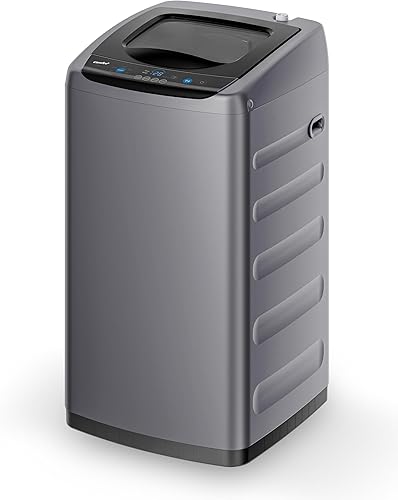

How Portable Washers Connect to a Faucet
Portable washers are built around the assumption that most users have a standard residential sink and no intention of doing permanent plumbing work. The connection system is simple: the machine ships with a fill hose and a small threaded adapter. You remove the aerator tip from your faucet, screw the adapter on in its place, and click the fill hose onto the adapter's quick-connect fitting. Turn on the water, and the machine fills on demand. Brands like Giantex, Costway, and Comfee all include this adapter in the box. The arrangement takes under five minutes to set up and leaves no permanent modification to the faucet or the sink.
When You Might Need an Additional Adapter
The included adapter fits the majority of kitchen and bathroom faucets, but some designs fall outside the standard. Older faucets with corroded or non-standard threads, very modern faucets with integrated non-removable aerators, and European-specification faucets can all require a different fitting. A universal adapter kit, available at hardware stores for a few dollars, includes multiple thread sizes and gasket types to cover most variations. If your faucet has a diverter already plumbed for a separate sprayer, you may also need a Y-connector that allows both the sprayer and the washer hose to share the same outlet. In every case, the solution is a small, inexpensive part rather than a new faucet.
Do You Need a Special Faucet for Portable Washers?
The short answer is no, and the context explains why portable washers have grown so popular with apartment renters. They are designed from the ground up to work with whatever faucet is already in the kitchen or bathroom. The only firm requirement is a threaded aerator end on the faucet, which has been standard on virtually every residential faucet manufactured in the past several decades. Even if your specific faucet thread does not match the included adapter, a hardware store trip costing under $10 resolves the issue without any modification to the plumbing or the wall.
How to Connect a Portable Washer to a Faucet Step by Step
Remove the aerator from the faucet tip. In most cases this unscrews by hand; use a cloth-wrapped wrench if it has been on for years and is stuck. Screw the washer's adapter onto the exposed threads, turning clockwise. Hand-tight is usually enough; a gentle quarter-turn with pliers creates a reliable seal without risking thread damage. Attach the fill hose's quick-connect end to the adapter. Open the faucet slowly to check for leaks. If water drips from the thread joint, add a layer of plumber's tape to the faucet threads and reinstall the adapter. With no leaks, plug in the machine, select a cycle, and start the first load. After the laundry is done, disconnecting the hose takes seconds, and the adapter can stay on the faucet for next time.
What If You Have a Kitchen Sprayer or Pull Down Faucet?
Pull-down and pull-out spray faucets are the most common exception to the straightforward connection process. Because the spray head detaches or extends from the faucet body, there is no fixed aerator to thread the adapter onto. Two approaches work here. The first is a diverter valve that installs at the base of the faucet neck and redirects water to an external hose port. The second is temporarily removing the spray head hose from its quick-connect socket on the faucet body and attaching the washer adapter directly to that outlet while the machine is running. Some models like the Hamilton Beach HBPW3O2AMZ include a longer fill hose that reaches more easily in kitchens where the sink and counter arrangement is awkward.
Can You Use a Portable Washer Without a Faucet Connection?
Yes, with certain machine types. Semi-automatic twin-tub models like the Giantex EP21684 can be filled manually by pouring water directly into the wash basin from a pitcher or bucket. This approach gives you full control over water temperature and amount but requires carrying the water yourself and manually draining the tub afterward. Fully automatic models, including the Comfee CLV09N1AMG, rely on the inlet valve being fed by pressurized water from a faucet. Their internal valves open and close based on water pressure, so manual bucket-filling does not work reliably for those machines. If you have no convenient faucet nearby, a semi-automatic model is the more flexible choice.
What About Drainage? Does It Also Need a Special Connection?
Drainage is even simpler than the inlet connection. Most portable washers drain through a hose that hangs over the inside edge of a sink or bathtub. Gravity or a small internal pump moves the water out of the drum and into the basin. No standpipe, no floor drain connection, and no plumbing modification are required. The Avanti CTW84X0W-IS, for example, uses a three-foot drain hose that drops into the sink. For machines with built-in pumps, the hose can reach somewhat higher, but for gravity-drain models, the sink must be at or above the drain outlet on the machine. If you are in a space without a nearby sink, draining into a bucket or a floor drain is also feasible.
Do All Portable Washers Come with Faucet Adapters?
The large majority do. Giantex, Costway, Comfee, Nictemaw, and most other popular brands include a faucet adapter in the box as a standard part of the package. Product listings usually mention the adapter in the included accessories list. If a particular model does not include one, a universal garden-hose-to-faucet adapter works as a substitute for a few dollars. The adapter is a small part, but confirming its presence before your first laundry day prevents an unnecessary delay. Once you have it installed, it can stay on the faucet between uses without any negative effect on normal sink function.
Common mistakes to avoid
- Assuming you need to install a new faucet before a portable washer will work, when the included adapter fits almost every existing kitchen faucet.
- Trying to attach the adapter without removing the existing aerator first, which leaves a gap and causes a drip at the joint.
- Overtightening the adapter with a wrench and damaging the faucet threads, making the aerator difficult to reinstall afterward.
- Ignoring a pull-out spray head attachment and assuming the adapter will still thread on, when a diverter valve is actually needed.
- Buying a washer without confirming the adapter is included, then waiting for a separate part before being able to run the first load.
Frequently asked questions
Can I use a portable washer with a pull-out kitchen faucet?
Yes, but you need a diverter valve or an adapter designed for pull-out faucets. The spray head can be temporarily removed from its quick-connect socket on most pull-out faucets, and the washer adapter attached in its place while the machine is running. A diverter valve is a more permanent solution if you run laundry frequently.
Do portable washers need both hot and cold water hookups?
Most portable washers connect to a single cold-water inlet. The machine handles the cycle temperature through its controls, and many cycles use cold water by default. Some models allow you to fill from a mixed-temperature faucet by adjusting how far you open the hot side, but a dedicated hot-water line is not required.
What if my faucet thread is too small for the included adapter?
Universal faucet adapter kits include multiple thread sizes along with rubber gaskets for a range of faucet diameters. If the included adapter is too large, the kit's smaller fitting will likely work. These kits are available at any hardware store for a few dollars.
Can I leave the adapter on the faucet permanently?
Yes. The adapter functions like a standard aerator when the washer hose is not attached. It does not affect normal sink use. Check it periodically for mineral buildup on the screen and rinse it clean to maintain good water flow.