Portable Washer vs Full Size Washer: Which Should You Buy?
Recommended picks

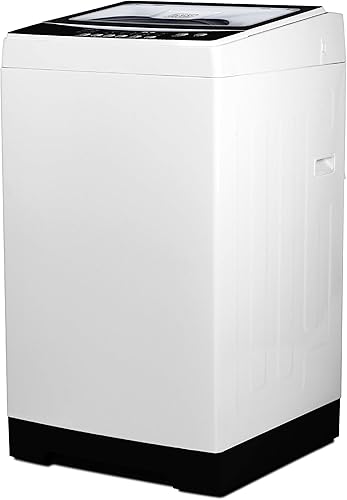

What Is a Portable Washing Machine?
A portable washing machine is a compact, often wheeled unit that connects to a standard kitchen or bathroom faucet through an included adapter. It requires no permanent plumbing: you attach the hose, plug into a standard outlet, run your load, and store the machine when done. Most portable washers are top-loading and range from 0.9 to 2.8 cubic feet. They suit apartments, RVs, dorms, and small homes where a dedicated laundry area does not exist. Prices generally fall between $80 and $450, placing them well below a typical full-size machine.
What Is a Full Size Washing Machine?
A full-size washing machine is a stationary appliance that requires permanent installation: dedicated hot and cold water lines, a standpipe drain, and a properly grounded outlet that may be 240V depending on the model. Capacities begin around 3.0 cubic feet and reach 5.0 cubic feet or more, comfortably handling large loads of bedding, towels, and a full week of laundry for a family. Full-size washers offer a wider range of cycle options, higher spin speeds, and better overall energy efficiency than portable units. The upfront cost runs from roughly $500 to over $1,500, and installation may add more.
Capacity: How Much Can Each Type Wash?
Portable washers typically range from 0.9 to 2.8 cubic feet, which covers roughly 8 to 20 pounds of laundry per load. That is realistic for two or three outfits, a set of towels, or a small load of sheets. The Giantex GX24640US-PE at 2.8 cubic feet is among the largest portable options. Full-size washers start at 3.0 cubic feet and go significantly higher, handling 15 to 25 pounds or more in a single cycle. If you wash for three or four people, or if you need to launder bulky comforters and king-size bedding regularly, a full-size machine will demand fewer cycles and less time.
Installation and Portability
The defining advantage of a portable washer is that it moves. Most models have casters and weigh between 30 and 80 pounds, so one person can roll the machine to the sink, connect the hose adapter, and start a cycle in a few minutes. No plumber is needed and no landlord approval is required. Full-size washers require a professional connection to hot and cold supply lines and a drain standpipe. Once in place, they weigh 150 pounds or more and are rarely moved. For renters or anyone who expects to change apartments in the next few years, a portable machine avoids both the installation cost and the hassle of coordinating a move.
Performance and Wash Quality
Full-size washers have a clear advantage on cleaning performance for difficult loads. Larger drums allow more mechanical action, higher spin speeds reaching 1400 RPM extract more water, and additional cycles like steam, sanitize, and allergen removal handle situations that portable machines cannot match. Portable washers typically spin between 800 and 1300 RPM and work through smaller volumes of water. For everyday loads of shirts, pants, and underwear, many portable models perform well: the Giantex GX24640US-PE carries 4.4 stars across more than 4,200 reviews, which reflects genuine buyer satisfaction. For heavily soiled work clothes or large family laundry, a full-size machine is the better tool.
Cost Comparison: Upfront and Long Term
Portable washers span from $80 for a basic manual model to roughly $450 for a premium fully automatic unit like the Hamilton Beach HBPW3O2AMZ. Full-size washers start around $500 for a basic top-load model and climb above $1,500 for high-capacity or feature-rich machines. Portable models avoid installation costs entirely, and their smaller loads use less water per cycle. However, full-size Energy Star models are more efficient per pound of laundry washed, so a household doing many loads per week may spend less on utilities over a few years with a full-size machine. The break-even point depends on local water and electricity rates and the number of loads run each week.
Space Requirements
A typical freestanding portable washer measures around 20 by 20 by 33 inches, and many models have casters so they can roll into a closet between uses. Countertop units like the Costway GT-23104-CYWH at 13.5 by 14 by 20 inches are even more compact. Full-size washers occupy a fixed footprint of 27 to 30 inches wide and 27 to 34 inches deep, plus clearance for the door and hose connections behind the unit. If your apartment or home has fewer than 10 square feet of dedicated laundry space, a portable washer is likely the only practical option. If you have a laundry closet with plumbing, a full-size machine becomes viable.
Drying Considerations
Neither portable nor full-size washers dry clothes on their own unless they are combo units. After washing, portable machines extract water through spinning, but clothes still need a dryer or drying rack. Portable dryers exist and pair naturally with portable washers, though they add both cost and floor space. Full-size washers are typically paired with a matching dryer, either a vented gas model, an electric model, or a heat-pump unit. Stacked washer-dryer configurations serve households with tight laundry closets. All-in-one washer-dryer combos handle both cycles in a single unit, though drying times are longer. If you lack space for a dryer of any kind, a portable washer plus a drying rack remains a practical solution.
Noise and Vibration
Lighter portable washers are more prone to vibration during the spin cycle because they are not anchored to a floor drain or wall hookup. Models with higher-quality builds and stainless steel drums tend to run more smoothly. The Costway GT-23104-CYWH countertop model is rated at 45 dB, making it among the quietest portable options. The Hamilton Beach HBPW3O2AMZ reaches 72 dB during its fastest spin. Full-size washers are heavier and have engineered suspension systems that dampen vibration; many run quietly enough to place in a hallway closet. If thin walls or close neighbors are a concern, check the decibel rating for any machine before buying.
Which One Should You Choose?
For a single person or a couple living in an apartment without laundry hookups, a portable washer makes strong practical sense. It requires no installation, costs less, and handles typical small-household laundry volume. Look for a model with a stainless steel drum and at least 1.5 cubic feet of capacity, such as the Giantex GX24640US-PE or the Costway 10091-CYPF, for the best combination of durability and usable space. For a family or anyone who does several loads per week, the investment in a full-size washer pays off through faster cycles, larger loads, and better long-term efficiency. Measure your space and budget honestly before deciding, and do not overlook the practical question of where the machine will drain.
Common mistakes to avoid
- Choosing a portable washer with too little capacity for your household and then running it four times a day to keep up with laundry.
- Assuming any portable washer connects easily to any faucet without checking thread size or faucet style first.
- Forgetting that portable washers do not dry clothes, then being surprised by a pile of wet laundry with nowhere to put it.
- Picking a portable model without a stainless steel drum and having it snag delicate fabrics after a few months of use.
- Ordering without measuring doorways or halls, then finding a 20-plus-inch-wide machine cannot be maneuvered into place.
Frequently asked questions
Can a portable washer replace a full-size washer?
For one or two people, a portable washer handles most typical laundry needs. It manages 8 to 20 pounds per load depending on the model, which is enough for a small household's weekly volume. For larger families or anyone who regularly washes bulky items, a full-size machine is more efficient and less time-consuming.
Do portable washers clean as well as full-size washers?
For everyday clothing loads, many portable washers deliver satisfactory results, especially models with stainless steel drums and multiple cycle options. Full-size washers have an advantage for heavily soiled or bulky items because their larger drums and higher spin speeds extract more water and apply more mechanical cleaning action.
How much space do I need for a portable washer?
Most portable washers occupy about 20 by 20 by 33 inches when in use, plus a few inches behind for hoses. A dedicated spot of about 4 square feet near a sink is enough. If you plan to store the machine between uses, a closet or corner with similar clearance works fine.