Twin Tub vs Single Tub Portable Washer: Which One Should You Buy?
Recommended picks


Choose a Twin Tub Washer for Faster Spin Drying and Lower Cost
Twin-tub portable washers dominate the budget end of the market for good reason. Separate wash and spin compartments mean the spin tub is dedicated entirely to extraction rather than shared with the wash cycle, and many models reach 1300 RPM or higher. That leaves clothes noticeably drier than a single-tub unit spinning at 760 or 840 RPM, which can reduce drying time by 20 to 30 minutes per load depending on the fabric. Well-reviewed examples include the Giantex EP21684, which carries 4.2 stars across 15,200 reviews, and the Costway 24961-CYPE at 4.3 stars across 2,200 reviews. Both offer capacities around 20 pounds and prices near $150. The required manual transfer of wet clothes from the wash side to the spin side is the main trade-off.
Opt for a Single Tub Fully Automatic Washer for Convenience
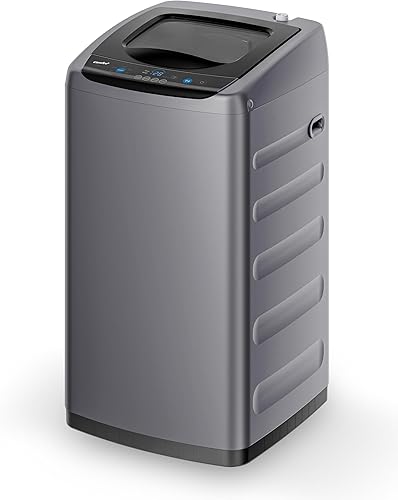
Single-tub portable washers, also called fully automatic or all-in-one portables, complete the entire cycle in one drum. You load the clothes, choose a cycle, and return to find them wrung out and ready to dry. No manual transfer, no timing two separate baskets, no wet sleeves from reaching into the wash side. Models vary from compact single-person options like the Comfee CLV09N1AMG at 0.9 cubic feet with 4.4 stars across 8,400 reviews, up to larger units like the Brand BPWM20W at 2.0 cubic feet and 4.4 stars across 9,100 reviews. Spin speeds in fully automatic portables usually fall between 760 and 840 RPM, below what twin-tub spin baskets achieve. Prices typically run from $200 to $450, reflecting the added mechanical complexity.
Consider Your Space and Portability Needs
Both types are portable by design, meaning they roll or carry to the sink and store away afterward. Twin-tub washers tend to be wider because two compartments sit side by side. The Giantex EP21684, for instance, measures 15 by 24.8 by 28.5 inches and weighs 28 pounds, which is easy for one person to move. Single-tub machines occupy a single square footprint. The Comfee CLV09N1AMG is 17.7 by 18.1 by 31.5 inches and weighs 44 pounds, a bit heavier but more compact in floor area. If you need to store the machine in a narrow closet or move it through a tight hallway, check the widest dimension against your clearances before ordering.
Capacity Comparison: Twin Tubs Often Hold More Clothes
Twin-tub models are frequently rated for larger pound capacities than their price would suggest. The Giantex EP21684 and Costway 24961-CYPE both carry 20-pound ratings, and some twin-tub models reach 30 pounds. Single-tub portables range from 0.9 cubic feet at the compact end to 2.8 cubic feet at the top. The Nictemaw M-5472 at 2.8 cubic feet is one of the most spacious single-tub options. Keep in mind that cubic-foot ratings and pound ratings are not directly interchangeable: a twin tub may advertise a higher pound capacity but wash less efficiently if the drum is narrow. For bulky items like jeans or small blankets, the twin tub's higher pound rating can be a genuine advantage.
Cycle Options and Features: Single Tubs Offer More Variety
Fully automatic single-tub machines typically include multiple programmable cycles. The Hamilton Beach HBPW3O2AMZ offers twelve cycles covering delicates, heavy duty, quick wash, and more. The Nictemaw NIC-55841-G has ten cycles. These options matter for households with a range of fabric types to wash. Twin-tub washers are simpler: one or two wash timer settings and a separate spin timer, usually controlled by mechanical knobs. There is no delay start, no automatic water-level sensing, and no cycle memory. For basic washing needs, that simplicity works perfectly. For households that wash wool, silk, or technical fabrics alongside cotton, the cycle variety of a single-tub machine is a practical advantage.
Noise Levels: Twin Tubs Can Be Quieter
Noise is worth considering carefully in apartment buildings. Twin-tub washers often have quieter spin cycles because the spin basket is small and dedicated. The Costway GT-23104-CYWH rates at 45 dB, and many similar twin-tub designs fall in the 45 to 55 dB range. Single-tub machines vary: the Hamilton Beach HBPW3O2AMZ reaches 72 dB during spinning, while the Giantex EP23113 runs at 55 dB and the Comfee CLV09N1AMG at 62 dB. If noise is a meaningful concern for you, check the decibel specification in the product listing rather than assuming one type is always quieter. The difference between 55 and 72 dB is significant in a small space.
Durability and Build Quality: Stainless Steel vs Plastic Drums
Single-tub fully automatic machines often feature stainless steel drums, which resist corrosion and are smoother on fabric fibers. The Comfee CLV09N1AMG and Brand BPWM20W are two examples. Twin-tub washers more commonly use polypropylene wash basins and plastic spin baskets. Plastic holds up well for light or occasional use but can develop small cracks or surface abrasions after a year or two of frequent cycling. A few twin-tub models do include stainless steel spin tubs, like the Nictemaw NI5573_4, which improves extraction consistency. If you expect daily use for two or more years, a machine with a stainless steel drum is a better investment regardless of the tub configuration.
Price and Value: Twin Tubs Are Cheaper, Single Tubs Offer More
The price gap between the two types is real and meaningful. Reliable twin-tub models like the Giantex EP21684 and Costway 24961-CYPE typically sell around $149.99 with high review counts and strong ratings. Fully automatic single-tub machines start around $200 and extend to $450 for premium models. The Comfee CLV09N1AMG is $259 and the Hamilton Beach HBPW3O2AMZ is $448. The extra cost buys automation, more cycle options, and often better drum materials. For a buyer on a firm budget who can tolerate the manual transfer step, a twin-tub machine at $150 delivers solid value. For a buyer who wants a simplified laundry routine and can spend $50 to $100 more, a single-tub machine repays that investment on every load.
Common mistakes to avoid
- Assuming all twin-tub spin baskets operate at the same speed: some reach 1300 RPM while others spin at 800 RPM, which makes a real difference in how dry the clothes come out.
- Forgetting the wet-clothes transfer step when buying a twin-tub model, then finding it inconvenient or messy once the machine arrives.
- Ordering a single-tub machine without confirming it fits the intended space, since the single-footprint design can still be wide or tall.
- Overlooking the noise specification for a single-tub machine, then discovering it is too loud for a thin-walled apartment.
- Picking a very cheap twin-tub with a fully plastic drum to save money, then replacing it sooner than expected due to surface wear.
Frequently asked questions
Which type of portable washer is easier to use?
A single-tub fully automatic washer is easier because the entire wash and spin cycle happens in one drum without any manual steps. Twin-tub machines require you to move wet clothes from the wash compartment to the spin basket, which adds a step but gives you more control over soak time.
Do twin-tub washers spin clothes drier than single tubs?
Generally yes. Twin-tub spin baskets often reach 1300 RPM or higher, while single-tub fully automatic machines typically spin at 760 to 840 RPM. The higher speed extracts more water, which means less time on a drying rack or in a portable dryer afterward.
Are twin-tub washers cheaper than single-tub models?
Yes. Most well-reviewed twin-tub portable washers sell for around $150, while comparable single-tub fully automatic models start closer to $200 and can reach $450. The lower price reflects the simpler mechanical design and the manual steps involved.
Can I wash large items like blankets in a portable washer?
It depends on the machine's rated capacity. Twin-tub models rated at 20 pounds can handle lighter blankets. Single-tub machines at 2.0 cubic feet or more, like the Brand BPWM20W, fit medium blankets. Always verify the drum dimensions against the item you plan to wash.
Which type is better for small apartments?
Single-tub machines have a smaller floor footprint because the wash and spin functions share one drum. Twin-tub units are wider because the two compartments sit side by side. On the other hand, twin-tub models are often lighter and easier to move. Noise levels vary by model, so check the decibel rating for any machine you are considering.